
Introduction
The tokera 2000W Peak Power Electric Fat Tire Bike for Adults is positioned as a high-power, all-terrain e-bike built to tackle snow, sand, trails and urban streets. With a claimed 2000W peak brushless motor, a removable 48V 18Ah battery, full suspension and wide fat tires, it promises both speed and range for extended off-road and commuter use.
This review examines the bike objectively across design, build, performance and practical trade-offs to help prospective buyers decide if it matches their needs.
Design & Build Quality
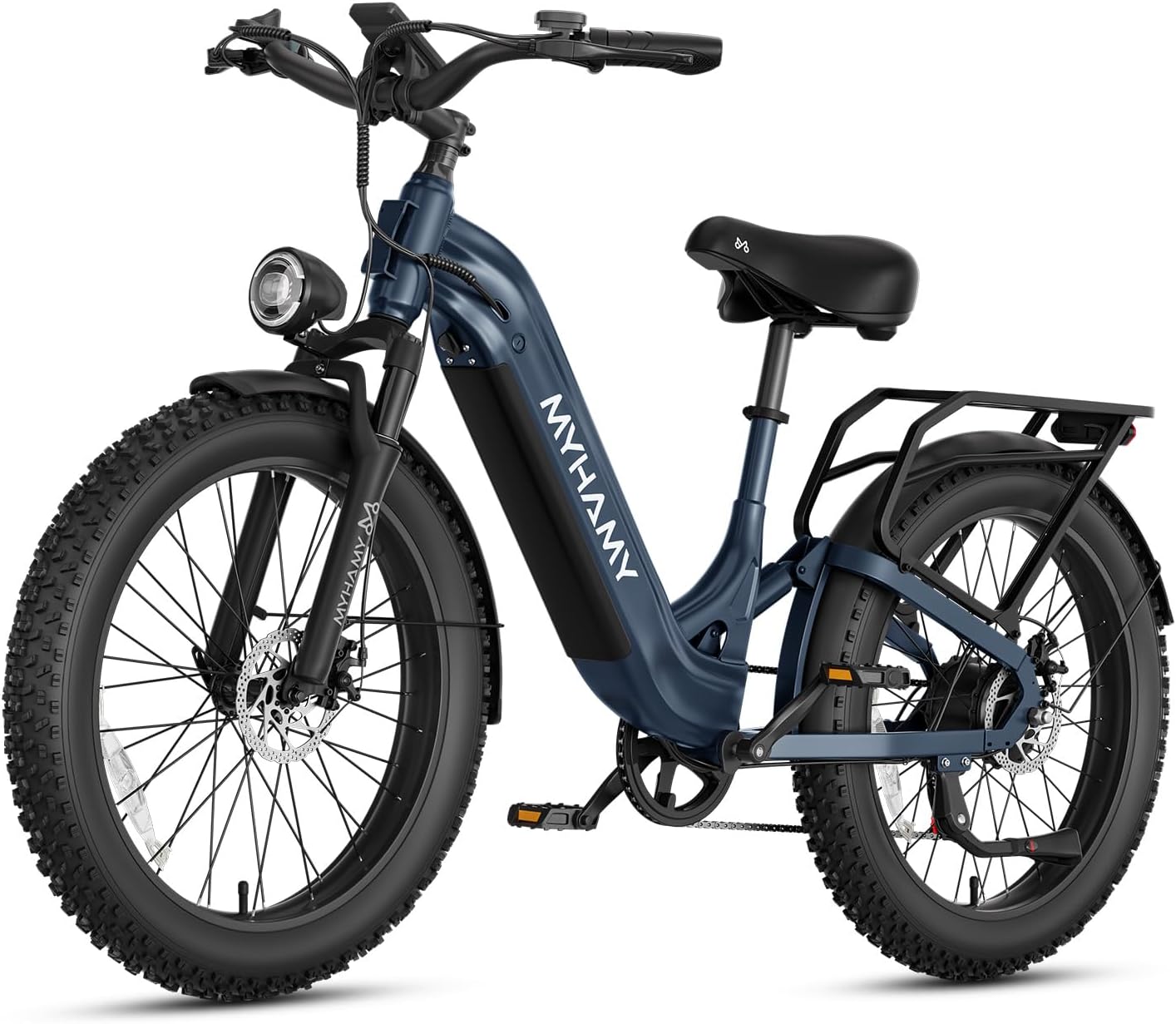
The frame and geometry are designed for rugged riding: the bike measures 67.32″ L x 28.74″ W x 44″ H and is rated for a maximum load of 330 lbs. At 82 lbs curb weight, the build feels substantial, reflecting a focus on durability rather than lightweight portability.
Construction details include a robust frame (material not specified in the brief) and a full-suspension layout with a front dual-tube and rear damping unit. The suspension components are intended to smooth rough terrain and improve stability at higher speeds.
Tire configuration is flexible: options list both 26″ x 4″ and 24″ x 3″ fat tires. The fat tire design and professional puncture-resistant casings provide wider contact patches for traction on loose surfaces such as sand and snow, and contribute to a planted, stable ride on gravel and mud.
Other notable build features include an 11″ ultra-comfort wide seat and front/rear disc brakes. The combination of wide saddle and suspension is geared toward comfort during long rides, while dual disc brakes deliver stronger stopping power than rim brakes, particularly in wet or muddy conditions.
Performance & Range
The headline performance figure is a 2000W peak brushless motor with a claimed top speed of 28 MPH (45 km/h) and the ability to handle 30° inclines. In practice, peak power describes short-duration output and actual sustained performance depends on controller tuning, rider weight, and terrain.
Acceleration and hill-climbing will be noticeably stronger than lower-powered commuter e-bikes; the motor should provide brisk starts and competent climbing on steep grades when battery charge and traction are sufficient. Expect torque to be most effective in pedal-assist and full-electric modes, but traction on steep, loose slopes will still be limited by tire grip and surface conditions.
Battery capacity is a substantial 48V 18Ah lithium-ion pack, removable for off-bike charging. Manufacturer claims up to 85 miles (130 km) in pedal-assist mode and 30–40 miles (50–70 km) in pure electric mode, with a full charge in approximately 7–8 hours. Those ranges are plausible as optimistic estimates under favorable conditions (moderate pedal input, flat terrain, lower average speed).
Real-world range will vary considerably. Factors reducing range include heavier rider and cargo loads, sustained high speeds, frequent acceleration, aggressive climbing, cold weather, and off-road surfaces that increase rolling resistance. Conversely, conservative riding at modest assist levels and flat pavement can approach the higher end of estimates.
Braking and control are handled by front and rear disc brakes, which provide more consistent stopping force than rim brakes, especially in wet or muddy conditions. The 7-speed drivetrain expands usability across gradients, allowing riders to find efficient cadences while using pedal assist.
The 2.4″ IP67-rated LCD display supplies key ride data (speed, battery level, PAS level, mileage) and includes an on-board Type-C charging port for devices. The IP67 rating provides good protection against rain and splashes, increasing confidence for all-weather riding.
Who Is This Best For?
- Adventure riders who want a powerful, all-terrain e-bike capable of tackling sand, snow and rough trails.
- Commuters with mixed surfaces who need a rugged bike that can handle unpaved sections and occasional off-road detours.
- Heavier riders or cargo users up to the 330 lb max load rating who require a sturdy frame and higher power for hills.
- Long-distance weekend riders who will use pedal-assist to extend range and appreciate a removable battery for convenient charging.
- Riders who prioritize comfort — the full suspension and extra-wide seat are designed for longer rides with reduced fatigue.
Trade-offs to Consider
- Weight and portability: At 82 lbs, this bike is heavy compared with many commuter e-bikes, making lifting, storage and transport more challenging.
- Maneuverability: Fat tires and larger footprint reduce nimbleness in tight urban spaces and when threading through traffic or narrow trails.
- Legal and safety considerations: A 28 MPH top speed and high-power motor may exceed local e-bike class limits in some jurisdictions; riders should confirm regulations, helmet laws and road access.
- Range variability: The 85-mile figure is an optimistic maximum in pedal-assist; expect significantly lower range under full-throttle, hilly, or cold-weather conditions.
- Maintenance and parts: Higher-power systems and fat-tire components can require specialized service; check local support for parts and repairs before purchase.
Final Verdict
The tokera 2000W Peak Power Electric Fat Tire Bike balances muscular on-demand performance, long-range potential and comfort-focused features to serve riders who want a capable all-terrain e-bike rather than a lightweight city commuter. Its 2000W peak motor, removable 48V 18Ah battery, full suspension, wide puncture-resistant tires and robust brakes make it well-suited for off-road adventures and heavy-duty use, while trade-offs in weight, maneuverability and regulatory fit should be weighed carefully. If you prioritize power, traction and extended range for mixed-surface exploration, this model is worth considering — check current price and availability to see whether it aligns with your budget and local regulations.