
Introduction
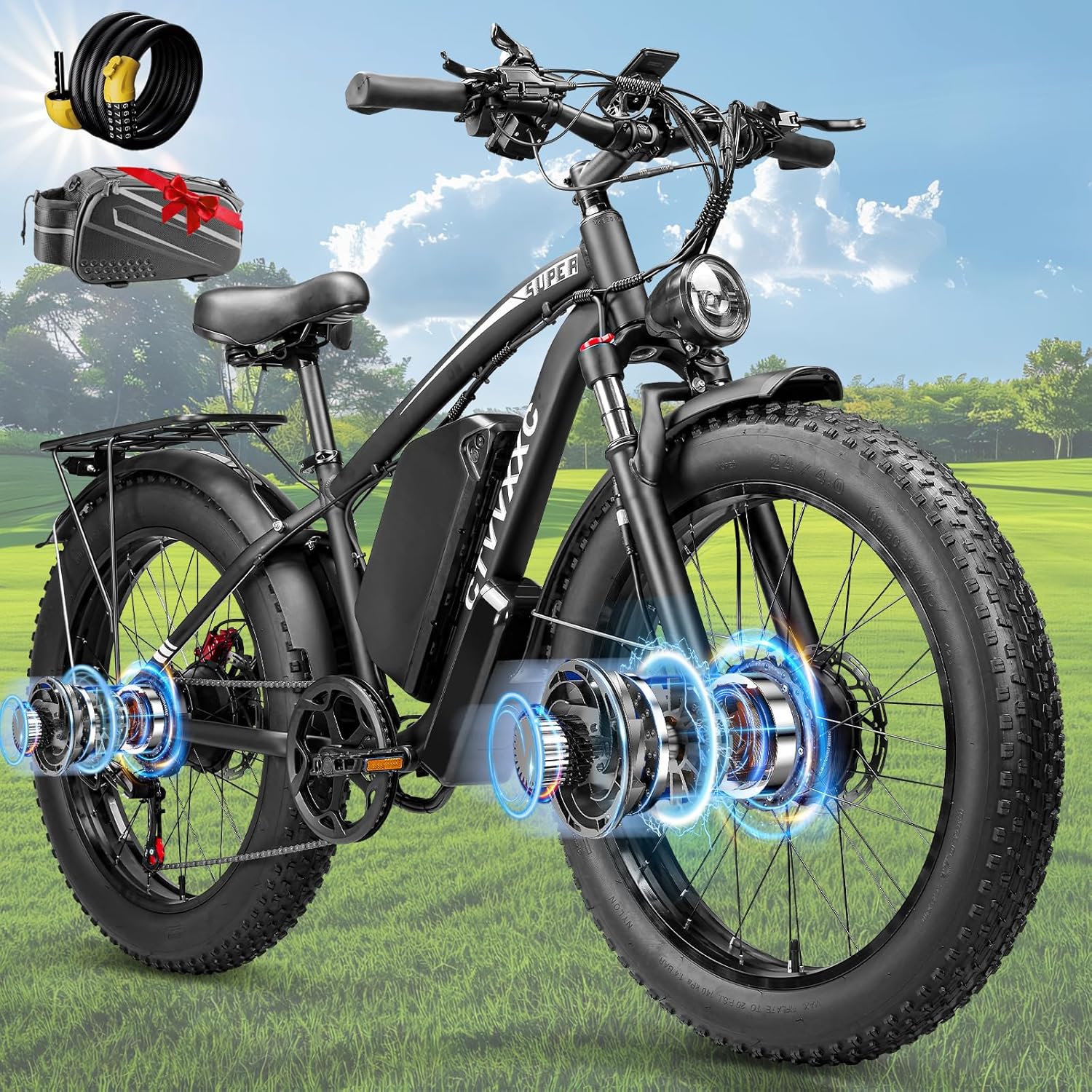
The 9000W Dual Motor Ebike from CTVVXXC aims to bridge high-performance off-road capability with long-distance touring on a fat-tire platform. Marketed as a dual 4500W brushless-motor setup (9000W combined peak), a 52V 34Ah (1768Wh) battery, lockable hydraulic suspension, and 24×4.0 tires, it promises 45 MPH top speed and up to 100 miles of range in light-assist mode.
This review assesses the bike objectively: what the specifications mean in real-world use, how the build and components hold up, who should consider it, and which trade-offs matter before purchase.
Design & Build Quality
The frame is an aluminum alloy design intended to balance strength and weight. Aluminum is a sensible choice for an ebike that needs rigidity for high torque and durability across rough terrain.
24 x 4.0-inch fat tires are a central design feature. They provide flotation and traction on sand, snow, and loose dirt, and they contribute substantially to a confident off-road feel. Expect slower steering response in tight urban traffic compared with narrower tires.
Suspension is described as an upgraded hydraulic front fork with a lock feature, plus saddle absorption to reduce road shock. The lockable function is useful for switching between bump-absorbing off-road mode and a firmer setup for efficient road riding.
Component-level details in the listing are limited, but the bike claims a pro 7-speed drivetrain and quality brakes, gears, and wheels. In practice, component quality (brand of shifters, derailleur, brake calipers) has an outsized effect on long-term reliability and serviceability.
Performance & Range
Motor and torque: The bike advertises dual 4500W peak brushless motors (9000W combined) and 200 N·m of torque. Those are manufacturer peak figures; they indicate the bike is designed for strong acceleration and climbing ability. In practice, sustained continuous power is lower than peak ratings, but the setup should outperform single-motor fat-tire ebikes on steep climbs and soft surfaces.
Top speed: The claimed maximum speed is 45 MPH in PAS Level 5. Achieving this depends on rider weight, terrain, wind, and local conditions. Importantly, many jurisdictions have legal limits for ebike speed and power; operating at 45 MPH may classify the bike outside typical ebike regulations and could require registration, insurance, or be restricted on certain paths.
Battery and range: The integrated 52V 34Ah (1768Wh) battery is a very large pack compared with most consumer ebikes. Manufacturer claims up to 100 miles reference PAS Level 1 (light pedal assist) under ideal conditions. Real-world range will vary widely: with modest rider input on relatively flat terrain you could approach the upper range, but aggressive riding at high PAS or heavy throttle use with both motors active will greatly reduce range.
Practical estimates: expect 40–60 miles under mixed conditions with moderate pedal assist, and potentially 20–35 miles when using high-power modes or sustained high speeds. Fat tires and dual motors increase rolling resistance and energy draw versus lighter commuter bikes.
Suspension and ride quality: The hydraulic front fork plus saddle damping are designed to improve comfort and control on rough surfaces. The lockable fork helps when transitioning to pavement where excessive suspension bob wastes energy. The claim of “85% bump reduction” is a marketing metric; actual comfort improvement will depend on fork travel, damping tuning, and tire pressure.
Assembly, service, and warranty: The bike ships partially assembled with instruction materials and video guides, which lowers the barrier for a non-mechanic to get started. CTVVXXC advertises 24-hour seller support and original parts replacement. Prospective buyers should confirm warranty duration, what is covered (battery, motor, frame), and the process for warranty claims.
Who Is This Best For?
- Experienced riders who want high-speed off-road capability and are familiar with maintaining high-power ebikes.
- Adrenaline-seekers who prioritize acceleration, hill-climbing, and top-end speed for trails, dunes, or snow.
- Commuters who need long range and ride in mixed conditions (gravel, snow, beach) and can plan for the bike’s size and weight.
- Riders who value modularity in suspension (lockable fork) and the traction advantages of fat tires for year-round adventure riding.
- People who understand local vehicle regulations and are prepared to register or limit performance to comply with the law.
Trade-offs to Consider
- Weight and portability: Large battery and dual motors add significant mass. The bike is not convenient to carry up stairs or store in compact spaces.
- Handling and maneuverability: Fat tires and a heavier frame reduce nimbleness in tight urban environments; turning radius and low-speed handling differ from standard e-bikes.
- Range variability: The 100-mile maximum is achievable only under light assist and ideal conditions. Real-world range is often much lower when using high power or off-road riding.
- Regulatory and safety concerns: 45 MPH top speed and high power output may push the bike out of legal ebike classes in some regions, exposing riders to licensing, insurance, or roadway restrictions.
- Maintenance and component sourcing: High-performance components, large battery packs, and dual motors can increase maintenance complexity and replacement costs. Verify local service options and parts availability.
- Noise and energy efficiency: Dual high-power motors may produce more noise and draw more energy during aggressive riding compared with single-motor setups.
Final Verdict
The CTVVXXC 9000W Dual Motor Ebike is a compelling option for riders who want aggressive off-road performance, exceptional traction from 24×4.0 fat tires, and a very large 1768Wh battery for extended outings. It offers impressive climb capability and a lockable hydraulic fork that balances comfort and efficiency, but prospective buyers should weigh the bike’s weight, handling differences, variable real-world range, and local legal restrictions on speed and power. For experienced riders seeking raw power and long-distance potential, this model presents strong value; check the current price and availability to determine whether it fits your use case and regional regulations before purchasing.