
Introduction
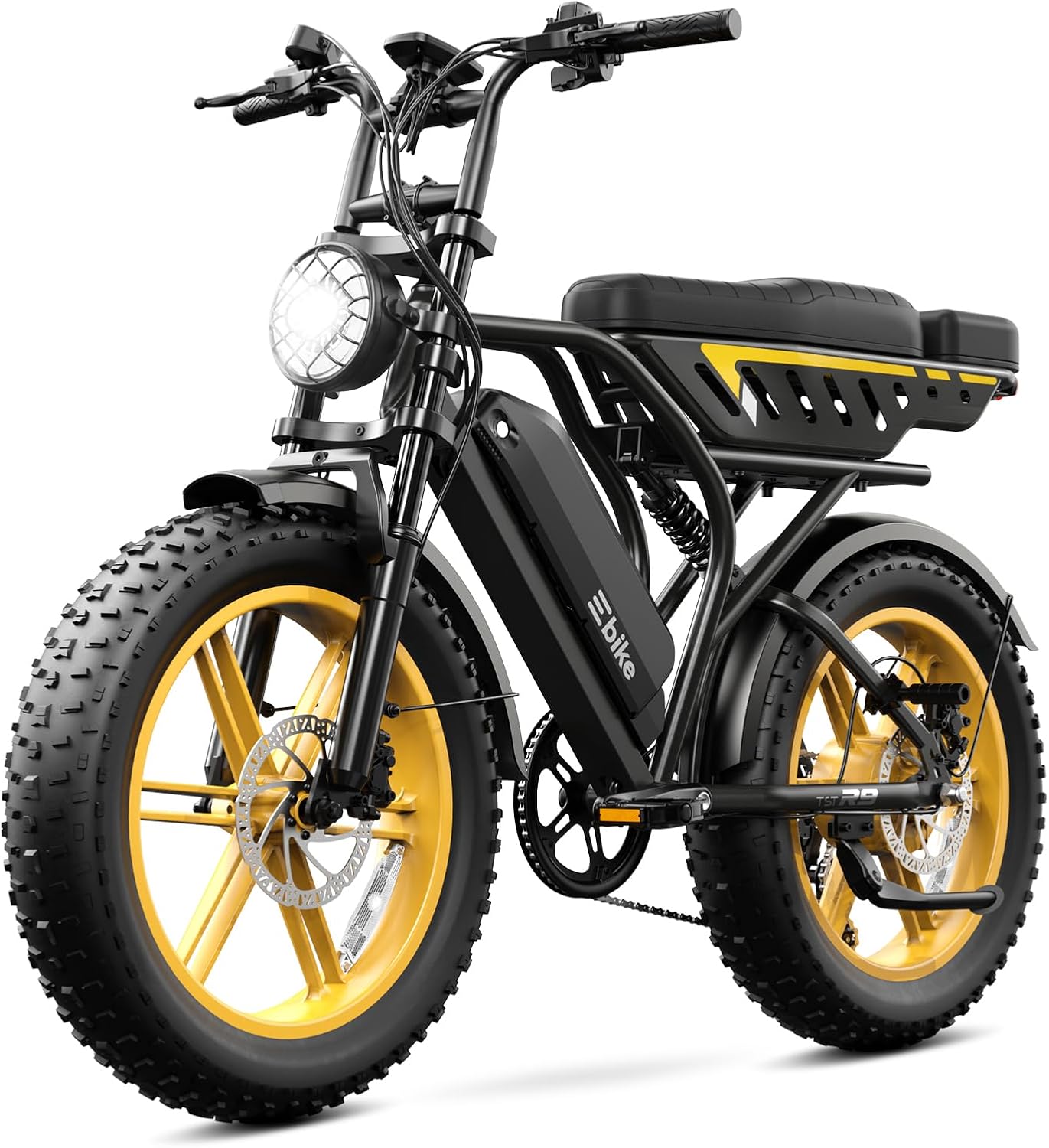
The TST Electric Bike for Adults (1500W peak) positions itself as a rugged, high-power e-bike aimed at off-road and mixed-terrain riders who want a step up from typical commuter models. With a claimed top speed of 28 mph, fat 20×4.0-inch tires, a removable 48V battery offered in 15Ah or 30Ah options, and safety testing to UL 2849, it markets itself as a do-it-all electric dirt bike for trail, sand, snow, and street use.
This review examines the bike’s design, components, performance claims, and practical trade-offs so you can decide whether it suits your riding needs and local regulations.
Design & Build Quality
Frame and ergonomics
The frame is built around a heavy-duty mountain/utility geometry with an extended seat and integrated rear rack, designed for longer rides and carrying light gear. The extended saddle provides a more comfortable, bench-like position compared with typical MTB saddles, which helps on longer rides or when sharing the seat with a passenger in casual use.
Weld quality and paint finish on the production units appear typical for mid-range e-bikes: serviceable and durable, but not premium-grade. Expect a robust feel rather than refined road-bike finesse.
Tires, wheels and ride contact
The 20×4.0-inch puncture-resistant fat tires are a central design feature. They provide excellent low-pressure traction on sand, snow, and loose dirt, and increase stability on uneven surfaces. The large footprint also dampens small bumps, though it increases rolling resistance on pavement.
Fat wheels reduce speed efficiency on road compared with narrower tires, but they are appropriate for the all-terrain intent of this model.
Components and finishing parts
Braking is handled by dual mechanical disc brakes rather than hydraulic systems. Mechanical discs are easier and cheaper to maintain, but they typically offer less modulation and stopping power than hydraulics—an important consideration given the motor’s power and possible higher speeds.
The bike includes a full suspension setup, 360° LED lighting (headlight, brake light, turn signals), and a removable battery pack. These features emphasize utility and safety, particularly for evening or multi-surface riding.
Performance & Range
Motor, torque and real-world speed
The hub-mounted motor is rated at 1500W peak with about 90 N·m of torque. In practice, that translates to robust acceleration and hill-climbing ability—the manufacturer claims the bike can handle slopes up to 35 degrees. For steep climbs, throttle control and torque help reduce rider exertion, and the torque figure suggests competent off-road performance.
The bike’s top speed is listed as 28 mph when configured via the companion app. That speed is notable for recreational off-road use, but riders should be aware that in many regions such speeds may change the vehicle’s legal classification.
Battery, range, and charging
The model offers a 48V battery in either 15Ah or 30Ah configurations (some listings show both options). The 30Ah battery is claimed to deliver up to 130 miles under ideal conditions, while the smaller pack is estimated closer to 60 miles. These figures are manufacturer claims and will vary widely with rider weight, terrain, assist level, tire pressure, and throttle use.
Charging time is advertised as about 5 hours to full using two charging methods (details in the manual). The removable, waterproof battery pack and UL 2849 testing are positive safety indicators, especially if you plan overnight or remote travel where battery safety matters.
Suspension and handling
The full suspension system helps the bike absorb larger impacts and improves comfort on rough trails. Combined with fat tires, the setup creates a forgiving ride over roots, ruts, and loose surfaces. Maneuverability is reasonable for its class, but the wide tires and sturdy frame make it less nimble than a light trail bike on tight singletrack.
Braking performance with mechanical discs is adequate on moderate descents but requires longer stopping distances at higher speeds or when laden. Riders should consider upgrading to hydraulic brakes if aggressive downhill use is expected.
Who Is This Best For?
- Riders who want an all-terrain e-bike capable of sand, snow, and trails rather than a focused commuting machine.
- People who value high torque and strong acceleration for hill climbing and off-road use.
- Users who prefer a long-range option (30Ah battery) for extended excursions or limited access to charging.
- Riders who prioritize safety-tested battery systems (UL 2849) and integrated lighting for nighttime visibility.
- Those comfortable with the added weight and reduced nimbleness of fat-tire, utility-style e-bikes.
Trade-offs to Consider
- Legal classification: The 28 mph top speed can push the bike into moped or motor vehicle categories in many jurisdictions, which may require registration, a license, or insurance. Check local laws before purchasing.
- Weight and portability: Fat-tire bikes with large-capacity batteries are heavy. Expect limited portability for carrying upstairs or loading on small car racks.
- Maneuverability on pavement: The wide tires and heavy construction reduce rolling efficiency and agility on smooth roads compared with commuter e-bikes.
- Brakes: Mechanical disc brakes are adequate but less powerful than hydraulic systems—consider an upgrade if you plan frequent high-speed descents.
- Warranty period: A six-month comprehensive warranty is shorter than some competitors; factor potential maintenance costs past that window.
- Real-world range variance: The 60–130 mile range claims depend heavily on battery size (15Ah vs 30Ah), assist level, rider weight, and terrain; do not expect top-end range in aggressive off-road use.
Final Verdict
The TST 1500W fat-tire electric bike is a compelling option if you want a purpose-built, high-torque e-bike for mixed-terrain riding and long excursions, especially with the larger 30Ah battery offering extended range and the safety reassurance of UL 2849-tested battery hardware. Its powerful motor, fat tires, full suspension, and integrated lighting make it versatile for off-road adventures, but buyers should weigh the compromises in legal classification, weight, road efficiency, and the mechanical braking system. If your priority is rugged, long-range off-road capability rather than ultra-lightweight handling or a commuter-specific setup, this bike is worth evaluating further—check current price and availability to compare configurations and select the battery option that matches your expected use.