
Introduction
This review examines the 48V removable lithium e-bike battery pack sold under the Reention Dorado Plus / SDTYYP listing, available in nominal capacities of 13Ah (624Wh) and 17.5Ah (840Wh). The pack claims an aluminum-alloy shell, a 30A BMS, a spring-loaded carry handle, DC2.1 charging, a two-pin discharge connector, a USB port and a keyed lock for frame mounting. I evaluate the pack on build quality, electrical performance, real-world range expectations, practical trade-offs and who will benefit most.
Design & Build Quality
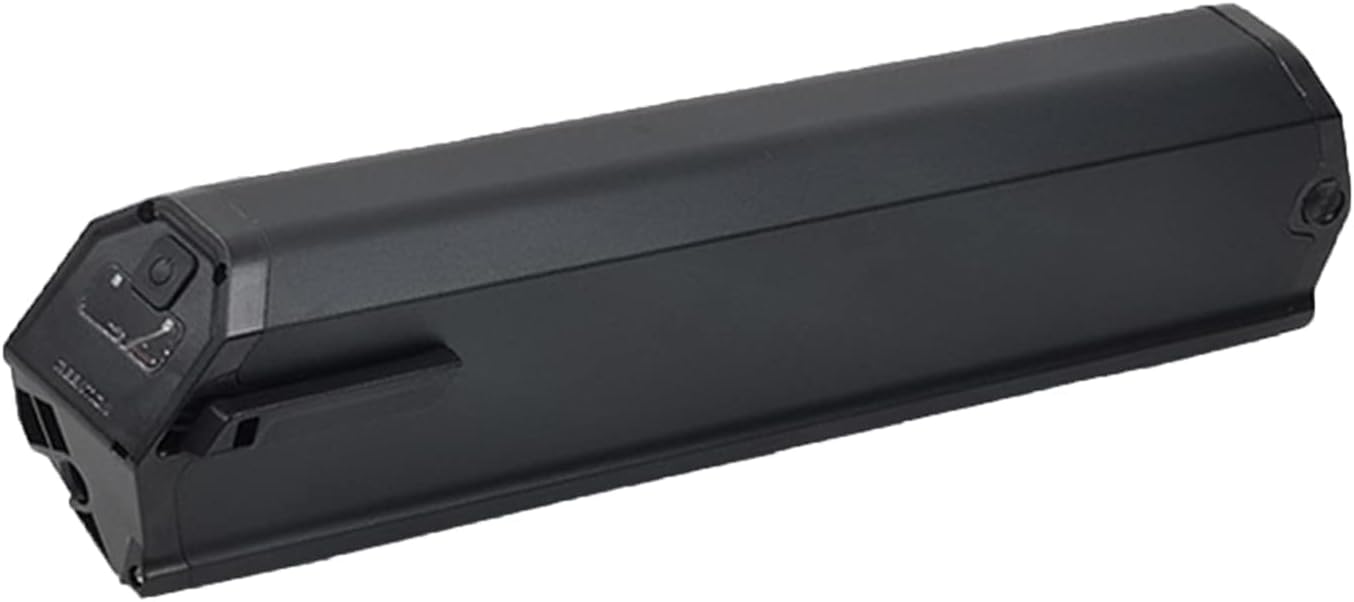
Physically the pack uses an aluminum alloy enclosure with a spring-loaded handle and a keyed security lock. The listing gives external dimensions of 460 × 104 × 65 mm (note: confirm version when ordering), which is consistent with a frame-mounted removable pack for mid-to-large e-bikes.
The pack includes a four-LED state-of-charge indicator and a DC2.1 charging inlet; discharge is via a two-pin connector and there is a USB output for low-current device charging. These features are convenient for everyday use—especially the removable design and lock for theft deterrence.
The seller states the cells are “65 automotive A+ grade cells,” and the pack is protected by a 30A BMS. However, the listing does not explicitly state cell chemistry, individual cell format (18650 vs 21700), or an IP ingress protection rating. Those omissions make it important to confirm cell type and water/splash resistance if you plan to use the bike in wet conditions.
Performance & Range
Capacity and voltage are the two primary performance drivers. The 13Ah variant is 48V × 13Ah = 624Wh, while the 17.5Ah variant is 48V × 17.5Ah = 840Wh. The seller specifies a maximum constant current of 30A from the BMS, which at 48V corresponds to a theoretical continuous output of up to 1440W (48V × 30A). The product listing also states compatibility with motors rated at 250W up to 1000W.
Interpreting these figures requires caution. A 30A BMS gives a robust continuous current headroom for many mid-powered setups, but continuous power delivery will depend on cable gauge, controller capability and heat management. Although the arithmetic suggests up to ~1440W is possible, the manufacturer lists typical intended motor sizes up to 1000W—so assume compatibility with mid- to high-mid motors rather than unlimited high-power use.
Range depends heavily on rider weight, terrain, assist level and riding style. To make this concrete: using common e-bike consumption estimates of 10–25 Wh per kilometer, the 624Wh pack should provide roughly 25–60 km per charge in typical mixed-use scenarios. The 840Wh pack scales accordingly, roughly 34–84 km per charge under the same assumptions. These are estimates with variable real-world factors; aggressive throttle use, steep hills, or cargo will push consumption toward the low end.
Charging behavior follows the stated charger options: the pack is charged to 54.6V and is offered with 2A or 3A chargers per the listing. Simple math gives expected charge times (ignoring some charging inefficiency): the 13Ah pack at 2A would take about 6.5 hours and about 4.3 hours at 3A. The 17.5Ah pack would need about 8.8 hours (2A) or 5.8 hours (3A). Allowing 10–20% for charger and cell inefficiency, plan for slightly longer times.
The inclusion of a small USB port provides a useful convenience for charging accessories or a phone while riding, but it is not a substitute for a dedicated power bank for heavy use. The 4-LED charge indicator offers a quick state-of-charge check, though it is not as precise as a dedicated display or battery management readout.
Who Is This Best For?
- Commuters who need a removable, lockable battery for daily use and occasional off-bike charging.
- Riders upgrading or converting hub/ mid-drive kits who want a higher-capacity option (624Wh or 840Wh) without a custom battery build.
- Users who value a metal enclosure and a carry handle for portability and perceived robustness.
- Riders who prefer longer range and are willing to accept longer charge times (choose the 17.5Ah for extended range).
- Owners of mid-power motors (250–1000W) who will benefit from the 30A BMS’s protection features and consistent output for typical riding conditions.
Trade-offs to Consider
- Weight and handling: Higher-capacity packs are heavier. The listing does not specify weight, but expect noticeable added mass that affects handling, especially on small frames or when lifting the bike.
- Charging speed vs. convenience: Included chargers are modest (2A/3A). Faster top-up charging requires a higher-current charger if the BMS supports it, but the listing does not state that explicitly.
- BMS current limit vs. motor ambitions: The 30A BMS is solid for many setups but may be limiting for sustained high-power use or heavy towing above 1000W motor systems; verify controller and wiring compatibility before pairing with high-power setups.
- Missing IP and detailed cell specs: The listing lacks an IP rating and explicit cell chemistry or format information, making long-term outdoor exposure and precise cycle-life expectations uncertain without vendor confirmation.
- Connector and compatibility issues: The pack uses a DC2.1 charging jack and a two-pin discharge connector. Those are common but not universal—confirm pinouts and connector compatibility with your bike’s wiring harness or conversion kit.
- Indicator limits: The four-LED indicator gives a rough state of charge but cannot replace an accurate battery monitor for long tours or multi-day planning.
Final Verdict
The Reention Dorado Plus / SDTYYP 48V removable battery presents a practical, mid-to-high-capacity option for e-bike riders seeking a lockable, removable pack with a metal shell, a helpful spring-loaded handle, USB convenience and a 30A BMS for protection. The 13Ah (624Wh) and 17.5Ah (840Wh) variants offer sensible range for commuting and mixed-use riding, but prospective buyers should confirm connector compatibility, weight, IP rating and exact cell format before purchase. If you want a reasonably priced upgrade or replacement battery for a 48V system and are willing to verify fitment and charging needs, this package is worth considering—check the current price and availability to judge its value relative to alternatives on the market.