
Introduction
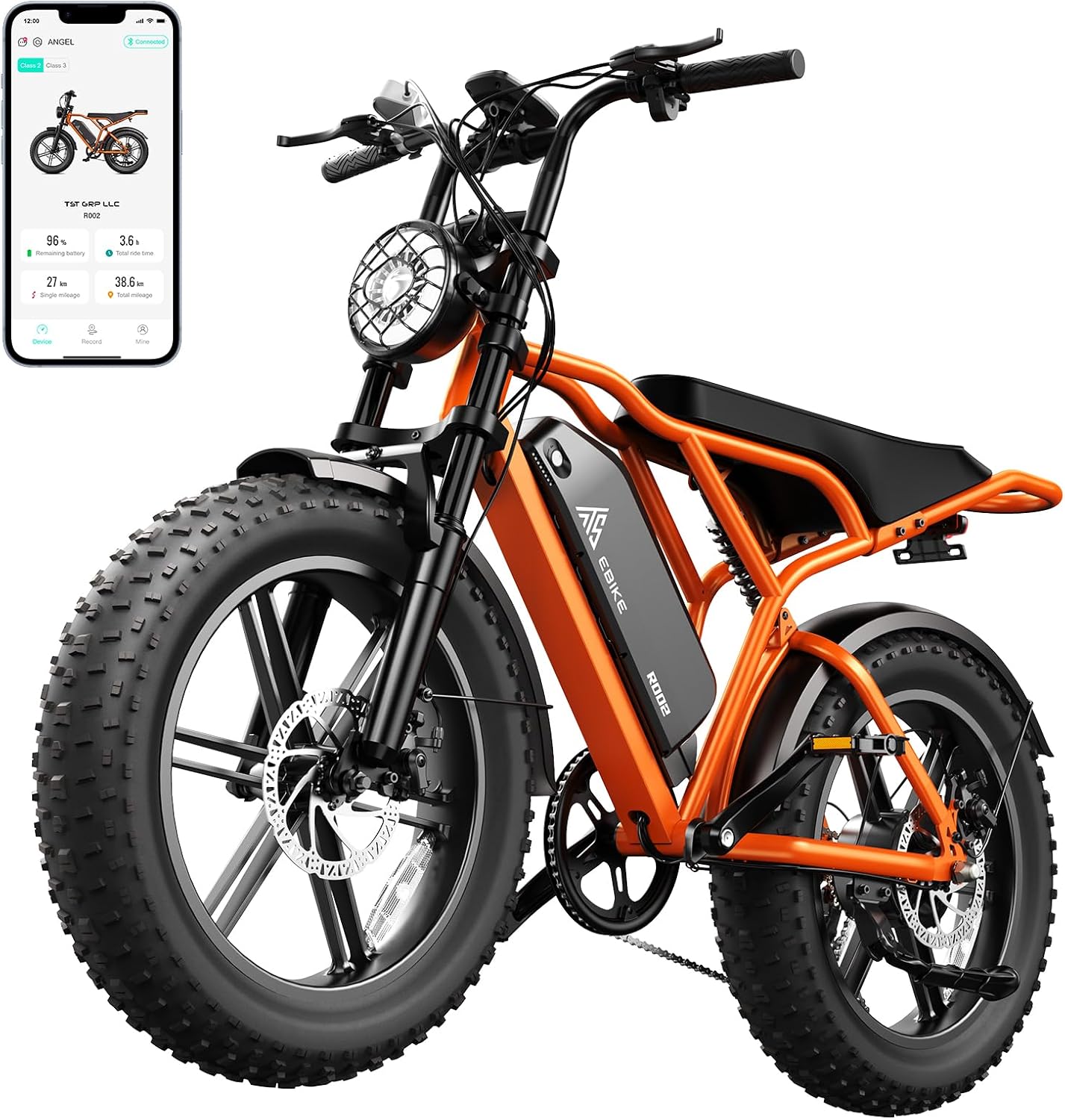
The TST Electric Bike for Adults is a 20″ fat-tire e-bike positioned as a high-torque, all-terrain commuter and recreational machine. It advertises a peak 1500W motor (90 N·m torque), a waterproof removable 48V battery (available in 15Ah and 25Ah configurations), full suspension, and wide 20×4.0-inch tires for mixed-surface riding. The battery system is reported to be tested to the UL 2849 standard by SGS, and the bike offers multiple riding modes plus app-adjustable limits up to 28 mph.
This review analyzes the TST’s design, durability, ride performance, and real-world range to help prospective buyers determine whether it meets their needs.
Design & Build Quality
Frame and chassis
The bike uses a compact 20″ wheel platform with a beefy frame designed to accept fat tires and a large removable battery. The extended seat with an integrated rear rack suggests a hybrid focus: comfort for longer rides and utility for light cargo. Overall welds, paint, and component fit are typical for mid-market direct-to-consumer e-bikes—adequate but not premium.
Tires and brakes
20×4.0-inch puncture-resistant fat tires are a core selling point. These provide increased flotation on sand and snow and improved traction on loose surfaces compared with standard 2.1–2.4″ tires. The tires and wider rims also increase rolling resistance on pavement and add weight, which affects acceleration and range.
Stopping is handled by dual mechanical disc brakes. Mechanical discs are robust and simpler to maintain than hydraulic systems, but they offer less modulation and stopping power under repeated heavy use—an important consideration on a heavy, high-speed e-bike.
Suspension, lights, and accessories
The listed full suspension setup (front fork plus rear shock) improves comfort off-road and on rough streets. The spec sheet does not list travel numbers or top-end dampening components, so expect suspension tuned for comfort and light trail use rather than aggressive downhill shredding.
360° LED lighting—headlight, brake light, and turn signals—adds visibility for night riding, and the integrated rear rack is useful for commuting or light cargo. Build details such as connectors, cable routing, and hardware torque are generally average; a pre-ride check to ensure bolts are tight is recommended.
Performance & Range
Motor and speed
The bike is rated at 1500W peak with 90 N·m of torque, which on paper is strong for a wheel-size of 20″. That torque figure supports the claim that the bike can handle steep grades (the marketing cites up to a 35-degree slope). In real-world terms, performance will vary with rider weight, tire pressure, and terrain.
Peak power figures are not the same as continuous power. Continuous output is typically lower, which is important for hill-climb endurance and top speed maintenance. The bike includes a throttle for pure electric operation and an app that can set the maximum speed; the app-set maximum is reported to reach 28 mph, which is fast for an e-bike in this configuration.
Battery, charging, and real-world range
Battery options include a 48V/15Ah removable pack and an optional 25Ah pack, both described as waterproof and UL 2849 tested by SGS. UL 2849 is a safety standard specific to e-bike systems; third-party testing is a positive signal for battery safety compared with untested packs.
Charging time is advertised at about 5 hours to full charge. Range claims are broad: about 60 miles per charge for the 15Ah pack and up to 110 miles with the larger 25Ah pack. Those figures are achievable only under ideal conditions—moderate speeds, mixed pedal assist, flat terrain, restrained throttle use, and conservative rider weight. Expect lower range when riding at high-speed throttle, on steep climbs, or with fully knobby fat tires.
Ride modes and handling
The TST offers three main modes: pure electric (throttle), pedal assist (sensor-based), and traditional pedaling. The pedal assist uses a speed sensor to supplement rider input, which can extend range and reduce effort on climbs. The combination of fat tires and full suspension makes the bike stable and comfortable over rough surfaces, but the trade-off is heavier steering and reduced nimbleness in tight urban settings.
Who Is This Best For?
- Commuters who need an all-weather, all-surface e-bike capable of short cargo duties and occasional off-road routes.
- Recreational riders looking for a fat-tire electric bike for beach, snow, gravel, and light trail riding.
- Riders who prioritize torque and hill-climbing ability over top-end range efficiency.
- Users who value a removable battery with built-in safety testing (UL 2849) and want the option to upgrade battery capacity.
- People seeking an e-bike with integrated lighting and a sturdy rear rack for utility use.
Trade-offs to Consider
- Weight and portability: Fat tires, a large frame, and a heavy battery make the bike heavier than standard e-bikes, which complicates lifting, storage, and carrying up stairs.
- Maneuverability in tight spaces: The 20″ wheels with 4.0″ tires increase turning inertia and slow handling compared to smaller, narrower urban e-bikes.
- Brake type: Mechanical disc brakes are simpler, but less powerful and consistent under hard, repeated braking than hydraulic systems—important on a fast, heavy e-bike.
- Range variability: The advertised 60–110 mile range depends heavily on battery size, riding mode, rider input, terrain, and speed. Don’t expect top-range numbers in full-throttle or hilly use.
- Local regulations: With an app-limited top speed up to 28 mph, the bike may exceed legal e-bike speed classifications in some jurisdictions and could be treated as a moped or motorcycle for licensing and helmet laws.
- Assembly and initial setup: Direct-to-consumer bikes often require user assembly and a pre-ride hardware check. The manufacturer notes to verify parts are tightened before riding.
Final Verdict
The TST Electric Bike for Adults is a capable, torque-forward fat-tire e-bike that delivers strong hill-climb performance, versatile off-road traction, and a battery system with independent UL 2849 testing—making it a good option for riders who need mixed-terrain ability and the option to upgrade battery capacity. Its strengths are clear in torque, suspension comfort, and utility features like an extended seat and rear rack; its compromises are weight, mechanical-disc braking, and the realistic variability in range. If you prioritize an adventurous, all-terrain ride and understand the trade-offs around portability and local speed laws, this bike is worth comparing against similarly powered fat-tire models and checking current price and availability.