
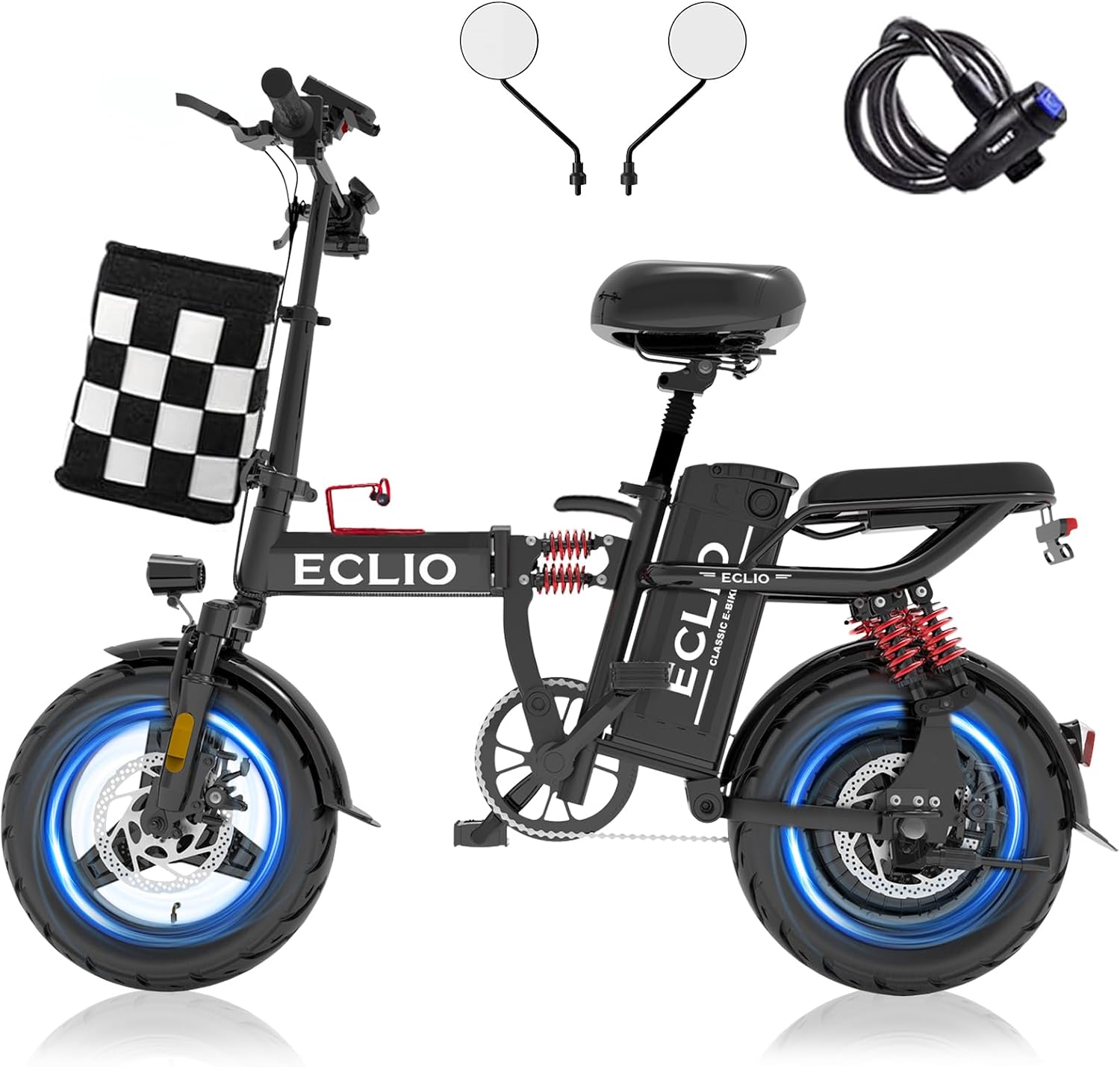
Introduction
The DDC SPORT M1 14-inch folding electric bike positions itself as a compact, urban-friendly e-bike that promises a blend of power, portability and comfort. It targets commuters and casual riders who want a machine that folds small enough for apartments or public transit while still delivering hill-climbing capability and a useful riding range.
In this review I examine the M1’s construction, drivetrain and real-world performance, and weigh the trade-offs so you can decide whether its combination of a peak 800W motor, 48V 14Ah removable battery and extensive shock absorption matches your needs.
Design & Build Quality
The M1 uses a folding frame with a compact folded footprint of 35.4 × 21.7 × 27.2 inches. That footprint makes it genuinely portable for storage in small apartments, train trunks and offices, and the quick-release designs for the handlebars, seat, pedals and frame simplify folding and setup.
Wheel size is 14 inches, which helps reduce the overall package dimensions but changes ride dynamics compared with larger-wheeled urban e-bikes. Smaller wheels accelerate responsively and help the folded package stay compact, but they can feel more reactive on rough surfaces and require careful suspension tuning to maintain comfort.
Build details emphasize comfort-oriented hardware: rearview mirrors, a secure phone mount and an 11-layer shock absorption system that combines multiple shocks placed across the frame and seat areas. The bike reportedly arrives about 90% assembled and passes the vendor’s compliance testing, and the manufacturer offers 12 months of support.
Performance & Range
The M1 is fitted with a brushless motor rated at a peak of 800W. The marketing information fluctuates slightly on top speed (some material cites up to 25 MPH while other statements list up to 20 MPH), so expect achievable top speeds to depend on the riding mode, local regulations, controller tuning and rider weight. The bike has a listed maximum payload of 265 lbs, so power delivery should be adequate for many riders navigating short slopes and urban hills.
The battery is a removable 48V 14Ah lithium pack. That translates to about 672 Wh (48 V × 14 Ah), a useful way to compare energy capacity across models. The manufacturer’s claimed range is 35–55 miles in electric assist (pedal-assist) mode. Those numbers are realistic given the battery: a consumption range of roughly 12–19 Wh per mile would produce the specified miles, which is in line with typical pedal-assist urban riding when the rider assists the motor and keeps steady speeds.
Real-world range will vary based on multiple factors: assist level, rider mass, terrain, average speed and how often you use throttle-only power. If you lean on the throttle often, climb long hills, or carry heavy loads, expect range to move toward the lower end of the band. Conversely, conservative assist usage and flat routes can reach the upper end.
Where the M1 aims to distinguish itself is in suspension. The advertised 11-point shock absorption system—composed of middle double shocks, hydraulic double shocks, dual seat spring shocks and additional rear shocks—is designed to mitigate the harsher ride characteristics of the small wheels. In practice, a well-engineered multi-shock system can smooth city potholes and cobblestones better than a minimalist suspension setup, but it typically adds complexity and weight.
Who Is This Best For?
- Compact commuters who need a foldable e-bike that fits into tight storage spaces, public transit bays or car trunks.
- Urban riders who want quick acceleration and practical peak power for short hill climbs and traffic starts.
- Those prioritizing comfort — riders who value a cushioned ride on bumpy city streets and want multiple shock elements to reduce fatigue.
- Apartment dwellers or office workers who prefer a removable battery for indoor charging without hauling the entire bike upstairs.
- Teens and casual riders seeking an e-bike with modest top speed and a manageable folded size for storage and transport.
Trade-offs to Consider
- Weight and portability ambiguity: The folded dimensions are compact, but the bike likely remains relatively heavy due to the multi-shock hardware and large battery. If you must lift the bike frequently, confirm the total weight before buying.
- Small wheels affect stability: 14-inch wheels make the bike more nimble but less stable at higher speeds and over large road imperfections compared with 20–26″ wheels.
- Top speed variance and legal limits: Marketing materials cite both 20 MPH and 25 MPH figures. Local e-bike class regulations may restrict throttle or speed, and headline numbers can vary by region and software limits.
- Complex suspension maintenance: An elaborate 11-shock system improves comfort but increases potential maintenance points and setup complexity compared with simpler suspension designs.
- Brake and component specifics not highlighted: The seller’s core features list does not specify brake type, lighting output or drivetrain brand. Buyers who need disc brake performance, integrated lights or particular component standards should verify those details.
- Range depends heavily on riding style: The 35–55 mile band is conditional on assist use and rider contribution. Expect significant variance if you use throttle-only power or ride in hilly terrain.
Final Verdict
The DDC SPORT M1 folding e-bike is a thoughtfully packaged option for riders who prioritize portability, a strong peak motor and a highly cushioned ride in urban and short-range commuting contexts. Its 48V 14Ah removable battery (≈672 Wh) and peak 800W motor pair well for practical hill-climbing and a useful 35–55 mile assisted range, while the compact folded dimensions and multiple quick-release points make daily storage and transport straightforward.
That said, prospective buyers should balance the advantages against the trade-offs—particularly the small 14″ wheels, added suspension complexity, and the need to confirm total weight and brake/component specifications. If you value a compact form factor and a plush urban ride, the M1 is worth considering; check the current price and availability to determine whether it matches your budget and local e-bike regulations.