
Introduction
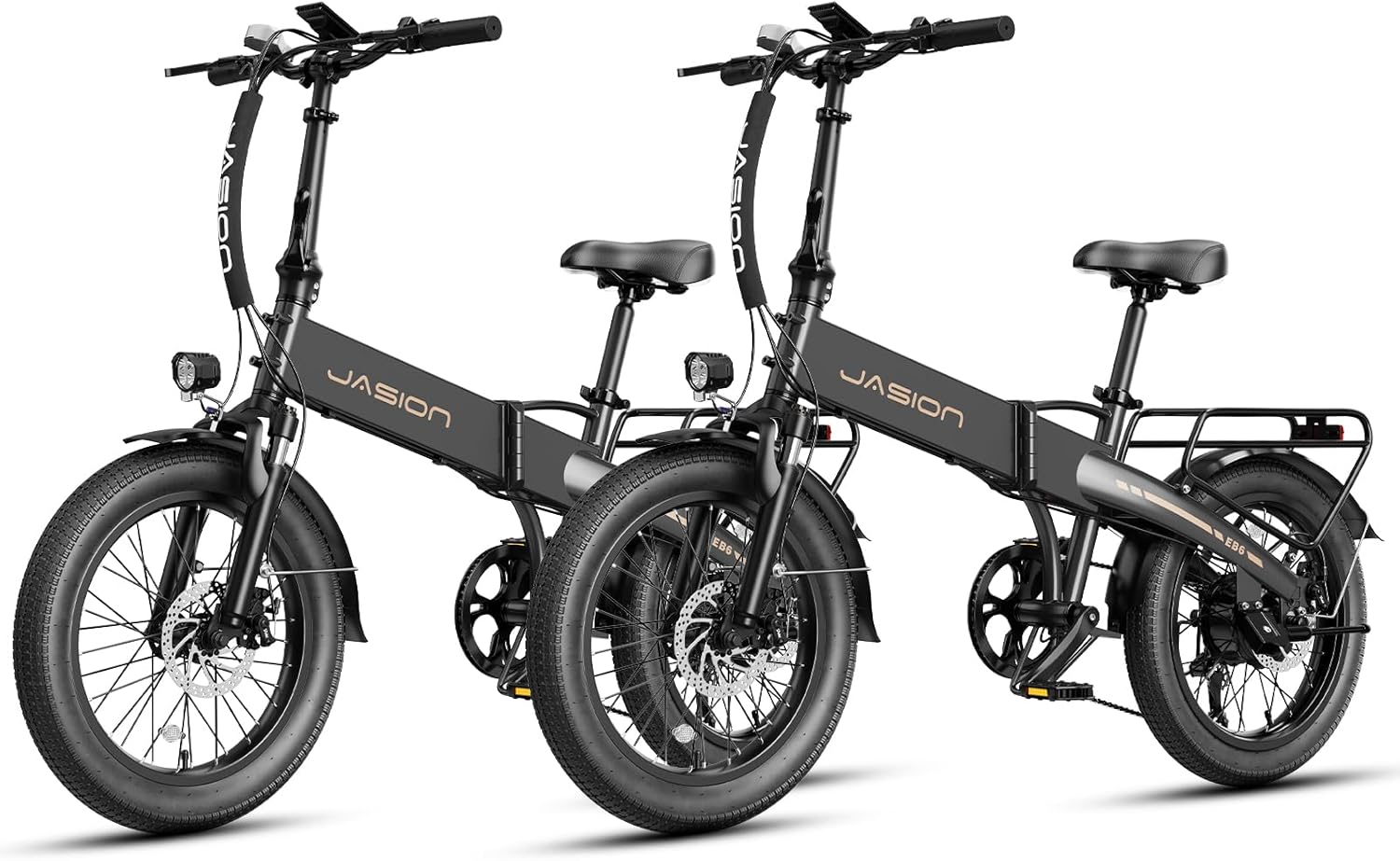
The Jasion EB6 is a foldable electric bike that positions itself as a versatile option for commuters, RV travelers, and weekend explorers. It combines a foldable aluminum frame with fat tires, a 1200W peak motor, and a built-in 48V battery to deliver a balance of portability, power, and comfort.
This review examines the EB6’s design, real-world performance, range expectations, and practical trade-offs to help prospective buyers decide whether it fits their needs.
Design & Build Quality
The EB6 uses a lightweight aluminum-alloy frame, which is a sensible choice for a foldable e-bike because it reduces corrosion risk and keeps weight down compared with steel. At about 59 lbs, it is heavier than many commuter e-bikes but light for a fat-tire, foldable electric bike.
Folding geometry and compact dimensions (reported at 36″ x 19″ x 29″) make the bike easier to store in car trunks, RVs, or tight apartments. The package arrives 90% pre-assembled, which lowers the barrier to getting on the road quickly and reduces the need for advanced setup tools.
Wheel and tire design is centered on versatility: the EB6 features 20″ wheels with fat tires that prioritize traction and comfort across varied terrain. Fat tires are effective at absorbing small bumps and improving stability on loose surfaces, though they increase rolling resistance on smooth pavement.
The frame supports a 330 lb payload, a practical capacity for a wide range of riders and light cargo. The listed shock-absorbing system contributes to ride comfort, but the bike’s suspension setup is described in general terms rather than with component specifications, so expectations should be moderate for aggressive off-road use.
Performance & Range
The EB6 advertises a 1200W peak motor with a top speed of 25 mph. Peak wattage describes maximum short-burst output, which helps with quick acceleration and hill starts, but sustained continuous power will be lower than the peak rating. In practice, riders can expect confident acceleration and ease when climbing moderate hills, especially with pedal assist engaged.
Power delivery is managed through a central LCD that displays speed, battery level, and ride data. The bike offers a 3+1 riding mode configuration—typically meaning three levels of pedal assist plus a throttle mode—so riders can tune assistance according to terrain and desired battery economy.
Battery capacity is specified as roughly 375 Wh (48V nominal), which aligns with a pack around 7.8 Ah. Manufacturer claims range figures between 45–50 miles, but those figures usually reflect conservative riding conditions: lightweight rider, flat terrain, lower assistance levels, and efficient pedaling. Realistic range will vary substantially based on rider weight, assist level, terrain, and use of throttle.
As a practical guideline, expect about 15–35 miles on heavier use (frequent high assistance, repeated hill climbs, or use of throttle-only) and potentially 30–45 miles under mixed commuting conditions with regular pedaling and moderate assist. Fat tires and the bike’s weight increase energy draw compared with narrower-tire commuters, so range-per-charge will generally be lower than equivalent-capacity narrow-tire e-bikes.
Suspension and fat tires improve comfort and control on light trails and rough roads. However, if your intended use is technical mountain biking, the EB6’s suspension and components are optimized more for durability and comfort than for high-performance trail riding.
Who Is This Best For?
- Commuters who need a foldable e-bike that fits in car trunks, public transit, or small apartments.
- RV owners and travelers who want a portable, durable e-bike for campground roads and nearby trails.
- Riders who value comfort and traction—particularly those riding on mixed surfaces, sand, or gravel—thanks to fat tires and a suspension system.
- Heavier riders or those carrying cargo who need a 330 lb payload capacity.
- Users who want straightforward, mostly pre-assembled setup and an intuitive LCD interface for ride modes and battery monitoring.
Trade-offs to Consider
- Weight: At ~59 lbs, the EB6 is heavier than many commuter e-bikes, which can make carrying it up stairs or lifting it into tight storage more difficult despite its foldability.
- Range variability: The 375 Wh battery is respectable for a compact package, but fat tires and heavier weight reduce achievable range compared with slimmer, lighter e-bikes—expect lower range under aggressive use.
- Built-in battery: The battery is integrated into the frame; this improves aesthetics and security but reduces convenience for off-bike charging or swapping spare batteries.
- Maneuverability: Fat tires and a compact 20″ wheelset provide stability but can feel less nimble in tight urban environments than bikes with larger wheels and narrower tires.
- Legal and regulatory considerations: The EB6’s 25 mph top speed and throttle option may affect how it’s classified under local e-bike laws. Riders should verify regional regulations and whether licensing or helmet requirements apply.
- Component detail: Public specifications provided focus on high-level attributes; some component-level details (specific brake model, suspension travel, or drivetrain specs) are not specified, which makes precise maintenance or upgrade planning harder.
Final Verdict
The Jasion EB6 is a well-rounded foldable e-bike that blends a sturdy aluminum frame, fat-tire comfort, and a high-peak-power motor into a package suited for commuters, RV users, and recreational riders who want a compact bike with good hill-climbing ability. Its 1200W peak motor, 48V/375Wh battery, and foldable design deliver a useful mixture of power and portability, while fat tires and suspension favor comfort across mixed surfaces. Potential buyers should weigh the bike’s practical limitations—weight, built-in battery, and variable real-world range—against its convenience and capability. If those trade-offs align with your riding needs, it’s worth checking current price and availability to determine whether the EB6 fits your budget and local e-bike regulations.