
Introduction
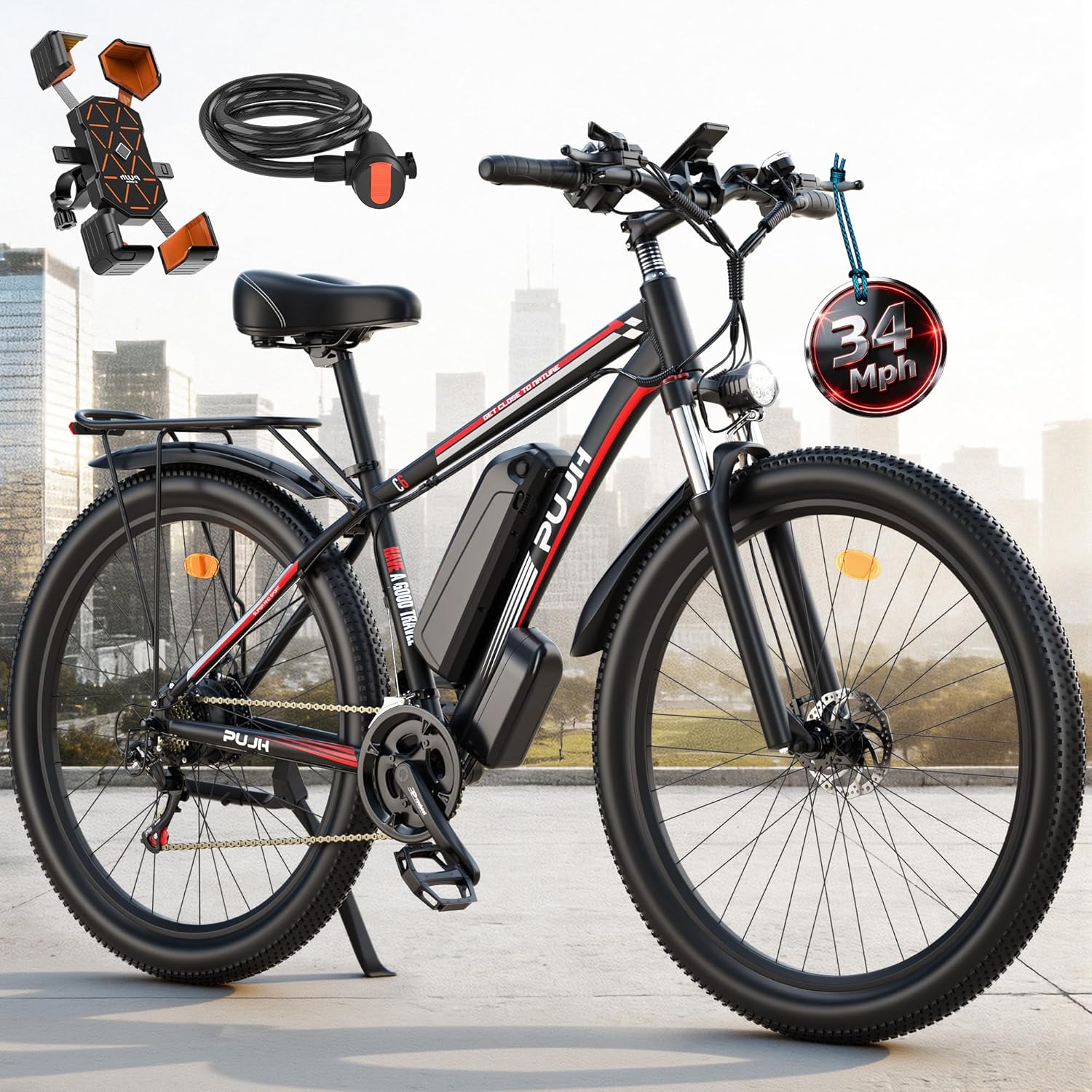
The PUJH 2000W electric bike is positioned as a high-powered fat-tire-style e-bike for riders who want more than a basic commuter model. With a claimed peak 2000W motor, 48V 17.5Ah battery, 29-inch tires, and a mix of road and off-road features, it sits in the category of electric bikes designed for versatility rather than just city riding.
At a glance, it aims to serve riders who want strong acceleration, a long battery range, and the ability to handle hills, dirt paths, and heavier loads. It also includes practical touches such as a color display, USB charging, lighting, and a rear cargo rack, which make it more than a recreational machine. The key question is not whether it looks capable, but how well those capabilities hold up in everyday use.
Design & Build Quality
The frame is made from 6061 aluminum, a common and sensible choice for e-bikes in this class because it balances weight, strength, and corrosion resistance. While aluminum does not make the bike especially light, it should help keep the structure durable enough for mixed terrain and regular commuting. The inclusion of an adjustable stem is also useful, since riders of different heights can fine-tune the fit.
The 29-inch tires are one of the most important design choices here. Compared with smaller wheel sizes, 29-inch tires typically roll more efficiently over bumps, gravel, and uneven pavement, making them a practical option for riders who split time between road and trail. They are not as compact or easy to maneuver in tight spaces as smaller wheels, but they contribute to a smoother ride and better obstacle handling.
Several accessory-level additions add to the bike’s everyday usefulness. The removable battery, front and rear fenders, LED headlight, signal light, cargo rack, twist throttle, and USB charging port all suggest a design focused on functionality. The colorful LED display should also help riders monitor basic ride data such as speed and battery status, though the usefulness of that display depends on visibility in sunlight and the quality of the interface.
Overall, the construction appears more utility-focused than premium. That is not necessarily a drawback if the bike is priced accordingly, but it does mean riders should view it as a feature-rich performance e-bike rather than a high-end branded machine with refined component selection throughout.
Performance & Range
The headline feature is the peak 2000W motor, which promises strong acceleration and better climbing ability than lower-powered commuter e-bikes. In practical terms, a motor of this size should feel noticeably more assertive when starting from a stop, riding uphill, or carrying extra cargo. The claimed 60 Nm torque supports that impression, though real-world performance will depend heavily on rider weight, terrain, battery charge, and how aggressively the bike is used.
The advertised top speed of up to 34 mph places it in a faster category than many standard e-bikes. That can be a major advantage for riders who need to keep pace with traffic or cover longer distances quickly, but it also raises important legal considerations. In many regions, a bike with this level of speed and power may be classified differently from a traditional pedal-assist e-bike, so riders should check local regulations before purchasing.
Battery capacity is another major selling point. The 48V 17.5Ah battery provides 840Wh of energy, which is a solid figure for a bike of this type. The manufacturer claims a range of 30 to 80 miles, but that range likely reflects very different riding conditions, from throttle-heavy use on hilly terrain to gentler pedal-assist riding on flatter roads. A realistic expectation is that aggressive riding will land much closer to the lower end, while conservative use could approach the higher end.
The removable and lockable battery adds convenience, especially for riders who live in apartments or want to charge indoors. That said, battery removal is only one part of long-term ownership; charging time, battery aging, and cold-weather performance will still influence usability. For riders who commute daily, the battery capacity should be sufficient for most round trips, but it may not fully replace charging habits if the bike is used at high power settings.
The front suspension should help reduce impact from rough roads, trail edges, and light off-road use. It is helpful for comfort, though it should not be confused with a full mountain-bike suspension system. Combined with the 29-inch tires, it should improve control and reduce fatigue on uneven terrain, but riders expecting aggressive downhill performance or technical trail handling may find the setup modest rather than specialized.
The 5 working modes broaden the bike’s appeal. Full throttle is useful for quick starts and easier riding on hills, pedal assist extends range, regular biking with the 21-speed gear system supports exercise and more traditional cycling, and walking assist is practical when pushing the bike uphill or through tight areas. This kind of flexibility is one of the bike’s strengths because it makes the same frame useful in multiple scenarios.
In daily use, the PUJH e-bike appears best suited to riders who want a hybrid between a commuter, utility bike, and light off-road machine. It should handle rough pavement, suburban routes, and dirt paths well enough for most non-technical users. Riders who want a simple, low-maintenance city e-bike may find it more powerful than necessary, while riders who want a true all-terrain option will appreciate the extra torque and larger wheel format.
Who Is This Best For?
- Commuters who want faster travel times and the option to use throttle or pedal assist on longer rides.
- Riders in hilly areas who need extra motor power for climbs and mixed-elevation routes.
- Off-road casual riders looking for a bike that can handle dirt paths, snow, gravel, and rough pavement.
- Heavier riders or cargo users who benefit from higher torque and the included rear rack.
- Riders who value versatility and want one bike for commuting, exercise, and weekend recreation.
- Buyers who prefer practical features such as a removable battery, lighting, USB charging, and fenders.
Trade-offs to Consider
- Potentially heavy frame and components make it less convenient to carry upstairs or load into a vehicle.
- Local legal restrictions may apply because the motor power and top speed exceed typical e-bike limits in some areas.
- Range is highly variable and may be much lower than the maximum claim when using throttle or riding aggressively.
- Large 29-inch wheels improve rolling comfort but can reduce maneuverability in tight urban spaces.
- Suspension is limited compared with true mountain bikes, so technical trails may reveal its limits.
- Component quality is feature-rich rather than premium, so long-term refinement may depend on maintenance and setup.
Final Verdict
The PUJH 2000W e-bike is a compelling option for riders who want strong motor output, a large battery, and practical features in one package. Its 29-inch tires, removable battery, multiple ride modes, and utility add-ons make it suitable for commuting, light off-road use, and mixed-terrain travel, provided the buyer understands its size, power, and legal limitations. For shoppers comparing high-powered e-bikes in this segment, it is worth checking the current price and availability to see whether the feature set aligns with the budget and intended use.