
Introduction
The Aipas M1 Pro and M2 Pro are designed as versatile electric bikes for riders who want one platform that can handle commuting, recreational riding, and light off-road use. With a fat-tire layout, dual suspension, and an 1800W peak rear-hub motor, they aim to bridge the gap between a practical city e-bike and a more capable trail-ready machine.
What stands out immediately is the way Aipas positions these bikes: not as specialized machines for one type of terrain, but as broad-use electric bicycles for everyday transportation and weekend exploration. The removable 48V 17.5Ah battery, 7-speed drivetrain, and multiple pedal-assist levels reinforce that flexible approach.
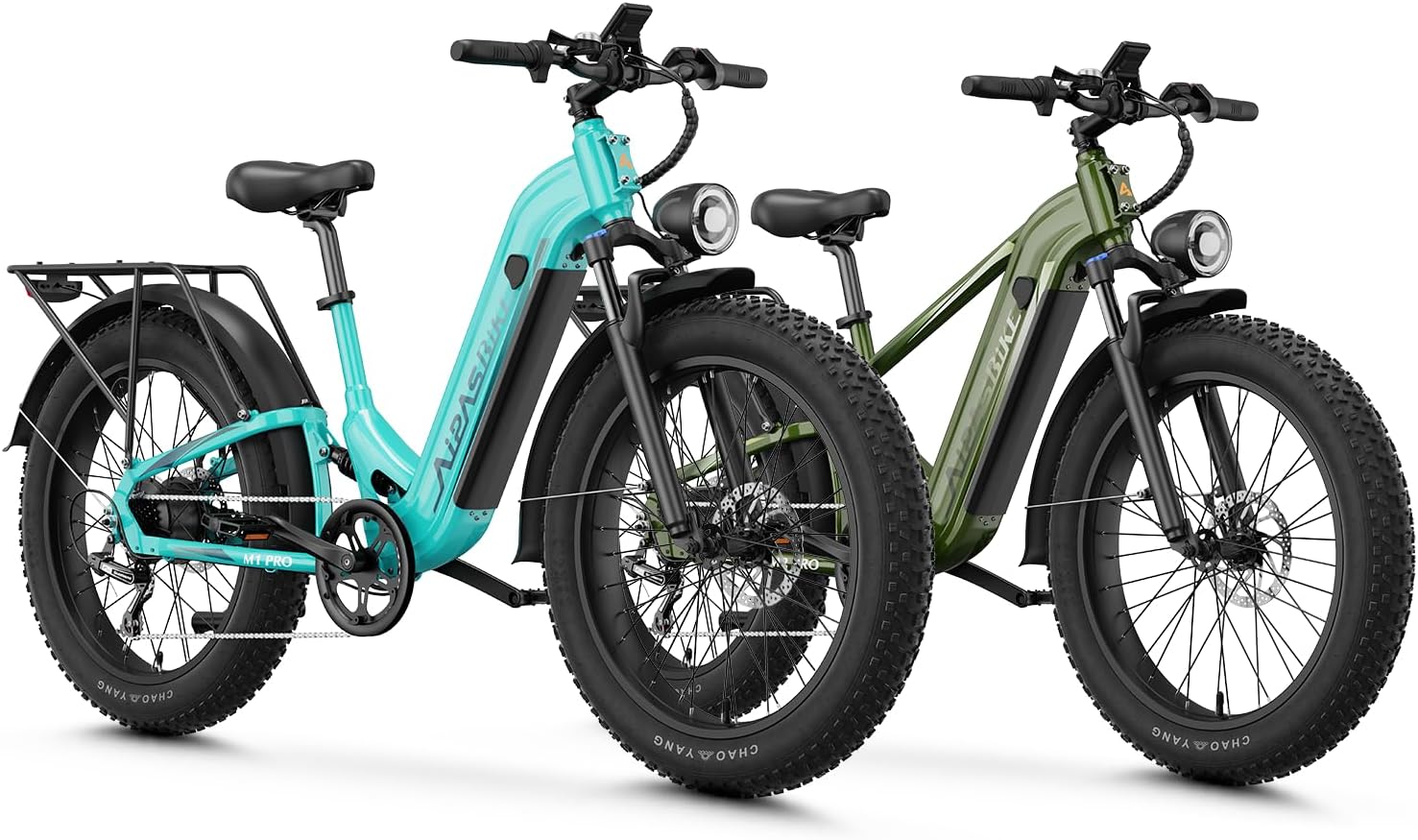
The M1 Pro and M2 Pro are functionally similar, but they differ in frame style. The M1 Pro uses a step-through frame for easier mounting and dismounting, while the M2 Pro uses a traditional step-over frame for riders who prefer that geometry. For buyers comparing utility, comfort, and off-road capability, that frame choice may be the main deciding factor.
Design & Build Quality
Aipas uses a fat-tire mountain-bike-inspired design here, with 26 x 4-inch tires and a sturdy frame intended to handle mixed surfaces. Visually and functionally, this is the kind of bike built to feel stable rather than lightweight, and that purpose is reflected in the overall construction.
The fat tires are one of the most important parts of the design. They offer a larger contact patch than standard e-bike tires, which can improve traction on gravel, dirt paths, uneven roads, and wet pavement. They also contribute to a smoother ride by helping absorb small bumps before they reach the rider.
The dual suspension setup adds to that comfort-oriented design. A 100mm front suspension fork and rear shock should help reduce harshness on rough streets and trail surfaces, although the real-world effect will depend on rider weight, tire pressure, and terrain. For casual trail riding and neighborhood riding, this is a meaningful upgrade over rigid or front-only suspension setups.
Fit and accessibility are also clearly considered. The M1 Pro step-through frame is a practical choice for riders who want easier entry and exit, especially when stopping frequently in traffic or wearing everyday clothes. The M2 Pro step-over frame may appeal more to riders who prefer a traditional mountain-bike feel or a slightly more familiar posture.
In terms of overall build, these bikes appear aimed at utility and stability rather than minimal weight or compact storage. That is consistent with their size, load rating, and fat-tire platform. Riders should expect a substantial bike that feels planted on the road, even if that comes with some physical bulk.
Performance & Range
The headline performance feature is the 1800W peak rear-hub motor, paired with 110Nm of torque. On paper, that is a strong setup for an e-bike in this class, and it should provide responsive acceleration from a stop, useful assistance on hills, and enough reserve power for mixed terrain riding. The manufacturer also states support for climbs up to 23 degrees, which suggests the bike is intended to handle steeper routes better than many entry-level commuter e-bikes.
That said, peak power does not always reflect continuous output, and real-world performance will depend on rider input, terrain, battery state, and assist level. In practical use, this kind of motor should feel most useful for commuting with frequent stops, riding into headwinds, and tackling moderate inclines without excessive effort.
The 48V 17.5Ah removable battery is another major selling point. Aipas lists up to 85 miles of pedal-assist range, which is a strong claimed figure for a bike of this type. As with most e-bike range estimates, actual distance will vary significantly based on rider weight, terrain, speed, assist level, temperature, and how aggressively the motor is used.
For many riders, the real value of the battery is not just the capacity but the convenience of removability. Being able to charge at home, at work, or in a garage is helpful for apartment dwellers and commuters alike. It also makes it easier to store the battery separately, which can be useful in colder climates or when parking the bike in less secure areas.
The 0-5 pedal-assist system gives riders flexibility in how much support they want. Lower levels can stretch battery life and still provide helpful assistance, while higher levels will make the bike feel more powerful and easier to ride on hills or rougher routes. A 7-speed drivetrain further expands versatility, allowing riders to fine-tune effort on varied terrain.
Braking and control are also reasonably well specified. The dual 180mm mechanical disc brakes with metal pads should offer dependable stopping power for daily riding and moderate descents. Mechanical disc brakes are not as refined as hydraulic systems, but they are serviceable, easier to maintain for some owners, and adequate for a bike in this class if properly adjusted.
The smart display and USB charging port add convenience rather than performance, but they matter in everyday use. Being able to check speed, mileage, battery level, and assist mode at a glance helps with route planning, and the USB port can be useful for charging a phone or accessory during longer outings.
One important practical point is weight. The M1 Pro is listed at 88 lb and the M2 Pro at 90 lb. That is normal for a fat-tire dual-suspension e-bike, but it affects how the bike feels in hand, how easy it is to maneuver when not riding, and how convenient it is to lift onto racks or carry upstairs. The 500 lb max load is generous, though, and will appeal to riders who prioritize capacity and durability.
Who Is This Best For?
- Commuters who want an e-bike that can handle pavement, potholes, and occasional rough patches without feeling too specialized.
- Recreational riders looking for a comfortable bike for park paths, neighborhood rides, and weekend cruising.
- Light trail and gravel riders who want extra traction and stability from fat tires and dual suspension.
- Riders who prefer a step-through frame for easier mounting, especially if they stop frequently or want a more accessible design.
- Riders who value range flexibility and want a removable battery for convenient charging.
- Heavier riders or those carrying cargo who benefit from the higher max load rating and sturdier build.
- Owners seeking one bike for multiple roles rather than a dedicated road bike, commuter bike, or mountain bike.
Trade-offs to Consider
- Weight and size are significant. At 88-90 lb, this is not an easy bike to carry, lift, or maneuver in tight spaces.
- Mechanical disc brakes are practical, but they may not feel as smooth or powerful as hydraulic brakes on higher-end models.
- Range claims are optimistic and will vary widely depending on terrain, assist level, rider weight, and weather.
- Fat tires improve stability but can add rolling resistance and make the bike feel less nimble than narrower-tire alternatives.
- Local e-bike laws may matter because 1800W peak power may exceed the limits allowed in some regions for street-legal electric bikes.
- Storage and transport can be challenging due to the bike’s bulk, especially for apartment living or smaller vehicle racks.
- Setup and maintenance may still require adjustment, even with 90% pre-assembly, particularly for brakes, derailleur tuning, and suspension setup.
Final Verdict
The Aipas M1 Pro and M2 Pro are solidly positioned as versatile fat-tire e-bikes for riders who want comfort, stability, and enough power for commuting, hills, and light trail use. Their strongest qualities are the dual suspension, removable high-capacity battery, flexible frame options, and practical features like the smart display, lights, and 7-speed drivetrain. They are not lightweight or minimalist bikes, but for buyers who want a capable all-around electric bicycle with broad everyday utility, they present a compelling package worth comparing against current pricing and availability.