
Introduction
The Aipas M1 Max and M2 Max are adult fat-tire electric bikes built around a straightforward idea: combine long-range commuting ability with enough off-road capability to handle mixed terrain. At a glance, they sit in the category of utility-focused e-bikes that aim to be practical first, while still offering enough power and comfort features to support recreational riding.
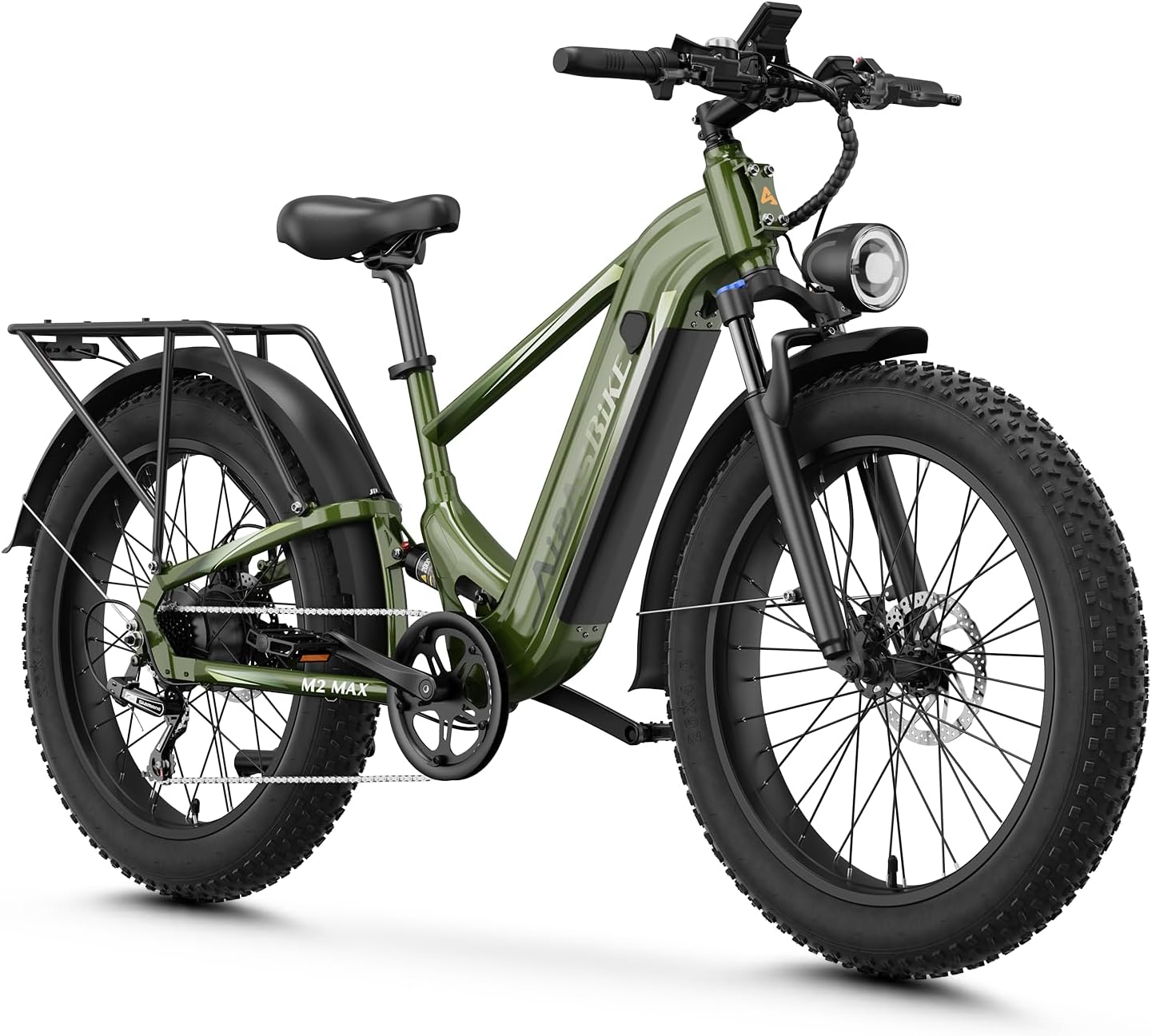
What stands out most is the way Aipas has split the series into two frame styles. The M1 Max uses a step-thru frame for easier mounting and dismounting, while the M2 Max uses a step-over design that will feel more familiar to riders who prefer a traditional mountain-bike setup. Both versions share the same core formula: a 26" x 4" fat tire platform, a high-capacity removable battery, upgraded suspension, and hydraulic disc brakes.
In practical terms, this is an e-bike aimed at riders who want one machine for commuting, neighborhood riding, gravel paths, and occasional trail use. It is not a lightweight city bike or a minimalist fitness bike; it is a larger, more capable utility e-bike designed to prioritize comfort, traction, and versatility over portability.
Design & Build Quality
The frame choice is one of the most important differences between the two models. The step-thru M1 Max should appeal to riders who value accessibility, frequent stop-and-go use, or simply want an easier way to get on and off the bike. The M2 Max’s step-over frame is better suited to riders who prefer a more traditional riding position and look.
Both bikes use 26" x 4.0" fat tires, which give them a noticeably planted stance. Fat tires are not only about off-road appearance; they also help absorb small bumps, improve confidence on loose surfaces, and widen the bike’s contact patch for better stability. On pavement, they can feel more cushioned and stable than narrower tires, though they also add rolling resistance.
The overall construction is centered on durability rather than low weight. The frame is made from 6061 aircraft-grade aluminum alloy, which is a sensible choice for balancing strength and corrosion resistance. At approximately 90 lbs, this is still a heavy bike, but that weight is expected for a fat-tire e-bike with a large battery, suspension, and a high-capacity motor system.
Attention to rider comfort is evident in the upgraded suspension setup. The Max version uses an air rear suspension system with adjustable pressure, along with an adjustable front fork. That combination should help reduce harshness on rough roads and uneven trails, especially for riders who spend extended periods in the saddle. It also suggests the bike is trying to do more than just look rugged; it is designed to smooth out the ride in a meaningful way.
Performance & Range
Performance is one of the strongest selling points of the Aipas M2 Max. Its 1800W peak brushless rear hub motor and 110Nm of torque place it in a category that should feel powerful for everyday riding and hill climbing. According to the manufacturer, it can handle slopes up to 30 degrees, which is a useful benchmark for riders in hilly areas or those carrying cargo.
The 5-level pedal assist system adds flexibility, allowing riders to choose how much electrical support they want. That can make a big difference in range management, since using lower assist levels on flatter terrain will generally extend the battery’s usable distance. There is no substitute for rider input when it comes to maximizing range, but the assist system gives the bike a practical balance between effort and efficiency.
The removable 52V 18Ah battery is another core feature. Aipas claims up to 85 miles of range with pedal assist, though that figure will depend heavily on rider weight, terrain, speed, assist level, weather, and tire pressure. In real-world use, riders should expect less than the maximum claim in most situations, but the battery size is still large enough to support long commutes or weekend rides without constant charging.
The removable battery design improves convenience. Riders can charge it indoors, at work, or in a garage without bringing the entire bike to a power outlet. For many users, that matters as much as the range itself, especially if the bike is stored in an apartment, shared space, or location without easy access to an outlet.
Comfort and control are reinforced by the upgraded air suspension system. Aipas says the setup can reduce vibration significantly, and while that kind of percentage should always be treated as a manufacturer claim, the general benefit is clear: a more adjustable rear shock helps the bike feel less rigid over broken pavement, gravel, and trail chatter. The adjustable front fork complements that setup and should improve rider confidence on longer trips.
Braking is another area where this bike appears to be well equipped. The hydraulic dual disc brakes with carbon-ceramic pads should provide stronger and more consistent stopping performance than basic mechanical systems. For a heavy, fast e-bike, that matters. Better brakes are not just about emergency stopping; they also reduce fatigue on descending roads and help riders feel more in control in traffic or on loose surfaces.
The 7-speed drivetrain adds useful gearing flexibility. While the motor does much of the work, having multiple gears still helps with cadence, climbing, and maintaining a more comfortable pedaling rhythm at different speeds. For riders who plan to mix pedal assist with human effort, the gearing setup makes the bike more adaptable than a single-speed or very limited drivetrain.
As a complete package, the M2 Max is best understood as a powerful utility e-bike with off-road credibility, not a lightweight commuter. It should feel especially capable for riders who need hill performance, suspension comfort, and dependable range more than they need portability or a compact footprint.
Who Is This Best For?
- Commuters who want a long-range e-bike that can handle mixed road conditions and reduce effort on daily rides.
- Riders in hilly areas who need strong torque and responsive climbing support.
- Adult riders seeking comfort who value suspension, fat tires, and a more stable ride over a lightweight frame.
- Recreational cyclists who want one bike for pavement, gravel roads, and light trail use.
- Riders choosing between frame styles and want either a step-thru option for easier access or a step-over frame for a more traditional feel.
- Long-distance pedal-assist users who may benefit from the removable battery and large-capacity power system.
Trade-offs to Consider
- Weight and bulk: At around 90 lbs, this is not an easy bike to carry upstairs, load into a vehicle, or store in tight spaces.
- Handling at low speeds: Fat tires and a heavy frame can make the bike feel less nimble than lighter commuter e-bikes, especially in tight turns or crowded areas.
- Range claims vary by use: The advertised 85-mile range is likely achievable only under favorable conditions and lower assist settings.
- Local legal restrictions: The motor power and top-speed capabilities may not fit every region’s e-bike classification rules, so buyers should check local regulations before purchasing.
- Size may not suit everyone: The bike is designed for riders roughly 5’8" to 7’6", which may limit comfort for shorter adults.
- More bike than some users need: If your riding is limited to short, flat commutes, this model may be larger and more powerful than necessary.
Final Verdict
The Aipas M1 Max and M2 Max are well-rounded fat-tire e-bikes for adults who want a mix of power, comfort, and versatility in one platform. Their strong motor, large removable battery, hydraulic brakes, and upgraded suspension make them appealing for commuting and mixed-surface riding, while the choice between step-thru and step-over frames broadens their appeal. If you are considering a heavy-duty electric bike for longer rides or varied terrain, it is worth checking the current price and availability to see whether the Max series fits your budget and riding needs.