
Introduction
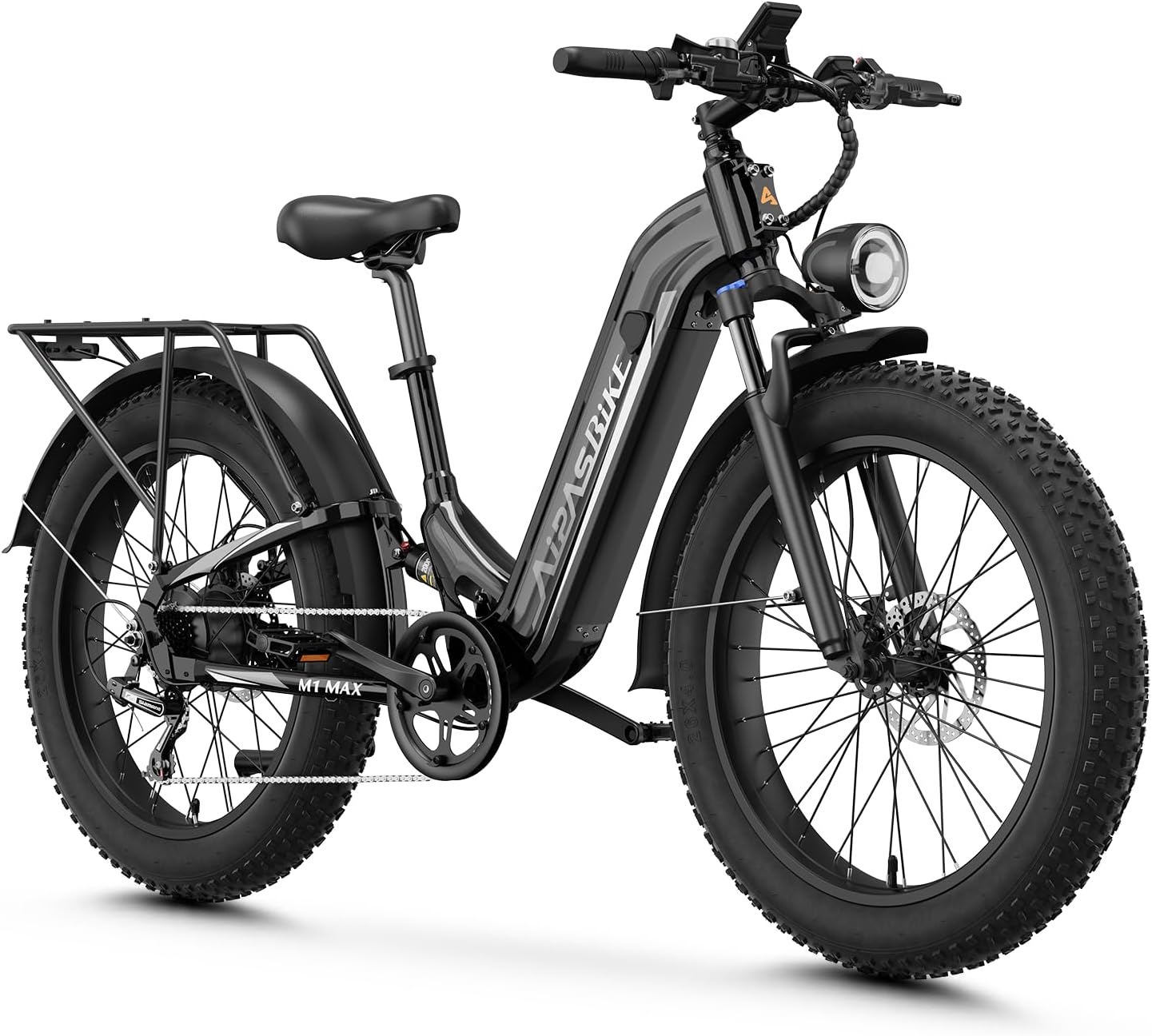
The Aipas M1 Max and M2 Max are built for adults who want an electric bike that can handle more than just smooth city streets. With 26″ x 4.0″ fat tires, a high-torque rear hub motor, and a suspension setup aimed at improving comfort, these bikes are positioned as practical all-rounders for commuting, recreation, and light off-road riding.
What makes the Max series notable is not just the power rating, but the way Aipas has packaged it into two frame styles. The M1 Max uses a step-thru design for easier mounting and dismounting, while the M2 Max keeps a traditional step-over layout for riders who prefer a more classic mountain-bike feel. That flexibility broadens the appeal without changing the core riding experience too much.
In simple terms, these are utility-focused fat tire ebikes for riders who value stability, range, and everyday versatility. They are not minimalist or lightweight, but they do appear to offer a well-rounded feature set for mixed-use riding.
Design & Build Quality
The design language is straightforward and functional. The most obvious visual feature is the 26″ x 4.0″ fat tire setup, which gives the bike a more planted stance and helps it feel confident on loose or uneven surfaces. Wider tires also tend to add comfort by absorbing some road chatter before it reaches the rider.
The two frame options are a useful distinction. The M1 Max step-thru frame should be easier for riders with limited flexibility, frequent stop-and-go commuting, or anyone who simply prefers a more accessible mounting position. The M2 Max step-over frame may appeal more to riders who want a familiar mountain-bike profile and slightly more traditional handling geometry.
Build materials also matter here. The bike uses a 6061 aircraft-grade aluminum alloy frame, which suggests a practical balance between strength and weight management. That said, at about 90 lbs, this is still a heavy bicycle, so the construction is clearly oriented toward stability and durability rather than easy lifting or compact storage.
The upgraded air rear suspension is one of the stronger design points. Compared with a standard rear spring setup, an adjustable air system can be tuned more precisely for rider weight and comfort preferences. The 41mm travel and claimed vibration reduction should make a noticeable difference on rough pavement and moderate trail use, while the adjustable front fork adds another layer of control.
Overall, the M1 Max and M2 Max seem thoughtfully built for real-world riding rather than visual drama. The design choices support comfort and control, but the bike’s size and weight mean it is best treated as a full-featured utility e-bike rather than a nimble commuter.
Performance & Range
Performance starts with the 1800W peak brushless rear hub motor, which is a serious figure for an adult ebike in this category. A claimed 110Nm of torque suggests strong low-speed pull, which should help with hill starts, steep climbs, and carrying heavier loads. The bike is also described as capable of handling slopes up to 30°, though real-world results will depend on rider weight, terrain, and assist level.
The 5-level pedal assist system should make it easier to manage power output over different ride types. For commuting, that means the motor can help reduce fatigue without forcing the rider to rely entirely on throttle or high assist settings. For recreational use, it should provide enough flexibility to preserve battery life on flatter routes while still offering strong support when needed.
Battery capacity is another important part of the value proposition. The 48V 17.5Ah removable battery is rated for up to 85 miles of range with pedal assist, although that number should be viewed as an idealized maximum rather than a guaranteed outcome. Range will vary substantially based on speed, terrain, wind, tire pressure, cargo weight, and how much assistance the rider uses.
The removable battery design is practical, especially for riders who cannot park close to a charging outlet. It also makes indoor charging easier and may reduce concerns about battery security when the bike is stored outside or in a shared garage. For many users, that convenience can be more meaningful than a small difference in top-end range.
The braking system is also a strong point. Hydraulic dual disc brakes with carbon-ceramic pads should provide more controlled stopping than basic mechanical systems, particularly on a heavier bike with wide tires. Aipas claims shorter braking distance and stronger braking power compared with mechanical brakes, and while those figures should be treated cautiously, the hardware choice is directionally positive.
The 7-speed gear system adds another layer of utility. It gives riders more flexibility when climbing, cruising at moderate speeds, or balancing motor assist with pedal input. That is especially helpful on a bike of this size, where gearing can improve efficiency and make the ride feel less dependent on the motor alone.
In practice, the M1 Max and M2 Max are best understood as powerful, comfort-oriented fat tire ebikes rather than speed machines. The combination of high torque, suspension, and wide tires should make them capable in a broad range of conditions, but their weight and size also mean they will not feel as quick or agile as lighter commuter bikes.
Who Is This Best For?
- Commuters who want a stable ebike with enough range and power for daily travel.
- Recreational riders who plan to mix pavement, bike paths, gravel, and light trail use.
- Riders who prefer comfort over lightweight handling, especially on rough roads.
- Adults seeking easier mounting who may benefit from the M1 Max step-thru frame.
- Traditional bike riders who prefer the M2 Max step-over frame and a mountain-bike style profile.
- Heavier riders or cargo-oriented users who need a higher maximum load capacity.
- Longer-distance riders looking for a removable battery and pedal-assist efficiency.
Trade-offs to Consider
- Weight is substantial, so lifting the bike onto racks, stairs, or storage hooks may be difficult.
- Fat tires add stability, but they can also make the bike feel less agile than narrower-tire alternatives.
- Range claims are best-case estimates; real-world distance will likely be lower in demanding conditions.
- High power may not fit local regulations, so buyers should check e-bike laws before purchasing.
- Large frame size may not suit everyone, especially riders who need a compact or lightweight commuter.
- Assembly is mostly complete, but the remaining setup still requires basic mechanical comfort or time to learn.
- Suspension and fat tires improve comfort, though they do not replace a full suspension mountain bike for aggressive off-road riding.
Final Verdict
The Aipas M1 Max and M2 Max are best viewed as capable, comfort-first fat tire ebikes for riders who want strong assist, decent range, and versatile handling across mixed terrain. Their combination of a high-torque motor, removable battery, hydraulic brakes, and adjustable suspension gives them a practical edge for commuting and leisure riding, while the step-thru and step-over frame options make the lineup more flexible than many competitors. If you want a heavy-duty adult ebike with broad usefulness and you are comfortable with the size, weight, and legal considerations of a powerful model, it is worth checking the current price and availability before making a decision.