
Introduction
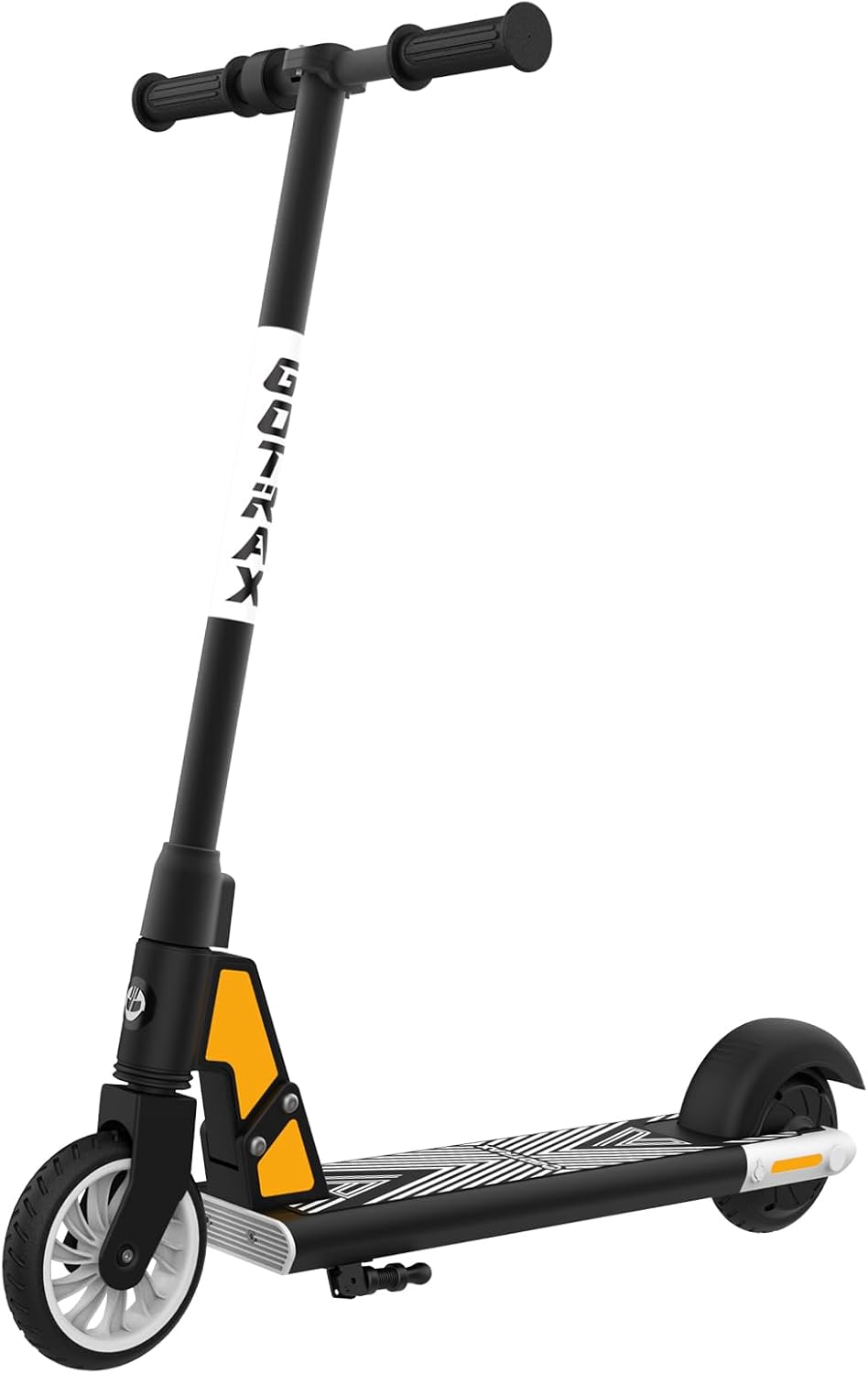
The Gotrax Electric Scooter for Kids 6-12, often referred to as the GKS Mini, is designed with a clear goal: give younger riders an electric scooter that feels exciting but stays controlled and approachable. With a top speed around 7 to 7.5 mph, a 150W motor, and a compact battery system, it sits in the category of entry-level electric scooters built specifically for children rather than scaled-down adult models. That distinction matters, because the riding experience, safety features, and power delivery all reflect a younger audience.
What stands out most is the scooter’s emphasis on safety and simplicity. It includes a thumb control throttle, a safe-start design that prevents sudden acceleration from a standstill, and braking options intended to help beginners learn at a comfortable pace. For families comparing kid-focused scooters, the GKS Mini is less about maximizing speed and more about offering a controlled, low-friction introduction to electric riding.
Design & Build Quality
The GKS Mini uses a straightforward, child-friendly design with a compact frame and 6-inch solid rubber tires. These tires are an important part of the scooter’s character: because they are solid rather than air-filled, they avoid punctures and reduce maintenance, while still absorbing some vibration on paved surfaces and cement. The trade-off is that ride comfort will be more limited on rougher ground than on scooters with larger or pneumatic tires.
Its weight capacity of 121 lbs places it squarely in the kids’ category, and the proportions are built for younger riders rather than taller teens. That makes the scooter feel more manageable for children ages 6-12, especially those who are just moving from push scooters to powered models. The deck and handlebar layout also reflect that simplicity, with controls positioned for easy reach and predictable use.
Assembly is another practical strength. Gotrax says setup can be completed in about 5 to 10 minutes by attaching the front wheel, connecting the pole and wiring, and securing the handlebar. For parents, that relatively easy assembly lowers the barrier to getting the scooter road-ready without needing special tools or a long build process.
From a quality standpoint, the scooter is backed by a 1-year limited warranty and after-sales support, which adds reassurance for a product meant for kids. It is also safety certified, with references to UL 2272 and CPC certification, which helps place it in a more credible category than uncertified budget models. While the scooter is not built like a premium commuter e-scooter, its construction appears sensible for its intended use.
Performance & Range
The scooter’s performance is intentionally modest, and that is a positive in the context of a children’s model. The 150W motor provides enough power for flat neighborhood streets, sidewalks, and paved paths, with a top speed around 7 to 7.5 mph depending on the specification being referenced. That is quick enough to feel fun, but not so fast that it becomes difficult for younger riders to manage.
One of the most useful design choices is the safe-start system. The motor will not engage from a full stop; instead, the rider must kick to reach about 1.87 mph before the throttle becomes active. This reduces the risk of accidental acceleration and makes the scooter easier for beginners to understand, since they can start in a familiar push-scooter style before using power.
The thumb control is another beginner-friendly feature. Rather than relying on a twist throttle or complex multi-button controls, the rider simply presses the thumb control to accelerate and releases it to stop power delivery. That simple interface makes the scooter more approachable for children who may not yet have the coordination or confidence for more advanced electric rides.
Braking is handled through an electronic brake plus a rear foot brake, giving riders two ways to stop. For a kids’ scooter, that redundancy is valuable because it supports learning and gives parents extra confidence. The brakes are not designed for aggressive riding or steep hills, but for typical neighborhood use they should be adequate and intuitive.
Range is a more nuanced point. The materials provided mention both up to 6.2 miles and up to 3.75 miles of ride time, which suggests that real-world range may vary depending on rider weight, terrain, speed, and battery condition. In practical terms, that means parents should view it as a short-range scooter for local play rather than a vehicle for extended outings. For many children, that is still enough for a neighborhood ride, park loops, or after-school fun.
The 25.2V 2.0Ah lithium-ion battery is compact and appropriate for this class of scooter. It supports the scooter’s light weight and quick, kid-oriented performance, though it is not intended for long-distance use. The battery’s main strength is consistency: it delivers smooth power that matches the scooter’s modest speed ceiling and helps keep the ride controlled.
It is also worth noting that the scooter does not appear to emphasize suspension. Instead, the ride quality depends largely on the solid tires and the relatively low operating speed. That means it will be most comfortable on smooth pavement, with less forgiveness on cracked sidewalks or uneven surfaces. For the right environment, however, the setup is practical and easy to manage.
Who Is This Best For?
- Children ages 6-12 who are ready for a first electric scooter and need a speed-limited, easy-to-use model.
- Beginner riders who benefit from a safe-start system, thumb throttle, and simple brake controls.
- Parents looking for a low-maintenance option thanks to solid rubber tires and a straightforward design.
- Families with paved neighborhoods or smooth paths where the scooter’s compact wheels and modest power can perform best.
- Gift shoppers seeking a practical present for birthdays, holidays, or school milestones.
- Kids who want a fun but controlled ride without the higher speeds and complexity of larger electric scooters.
Trade-offs to Consider
- Limited speed and range mean it is best for short rides, not longer trips or commuting.
- Smaller 6-inch solid tires are low-maintenance, but they can feel firmer on rough pavement than air-filled tires.
- No strong emphasis on suspension means comfort is tied closely to smooth riding surfaces.
- Lower weight capacity of 121 lbs makes it unsuitable for older kids or heavier riders.
- Shorter battery capacity may require more frequent charging if used often.
- Best performance on flat terrain, so hills and uneven ground may reduce usability.
- Local rules may vary for electric scooters, so families should check age, speed, and sidewalk regulations before riding.
Final Verdict
The Gotrax Electric Scooter for Kids 6-12 is a well-targeted entry-level e-scooter that prioritizes safety, simplicity, and manageability over raw performance. Its safe-start behavior, thumb throttle, dual braking, and child-friendly speed limit make it a sensible choice for younger riders, while the solid tires and warranty add practical value for parents. It is not built for distance, rough terrain, or older children, but for families seeking a controlled first electric scooter, it offers a balanced and credible package worth comparing against the current price and availability.