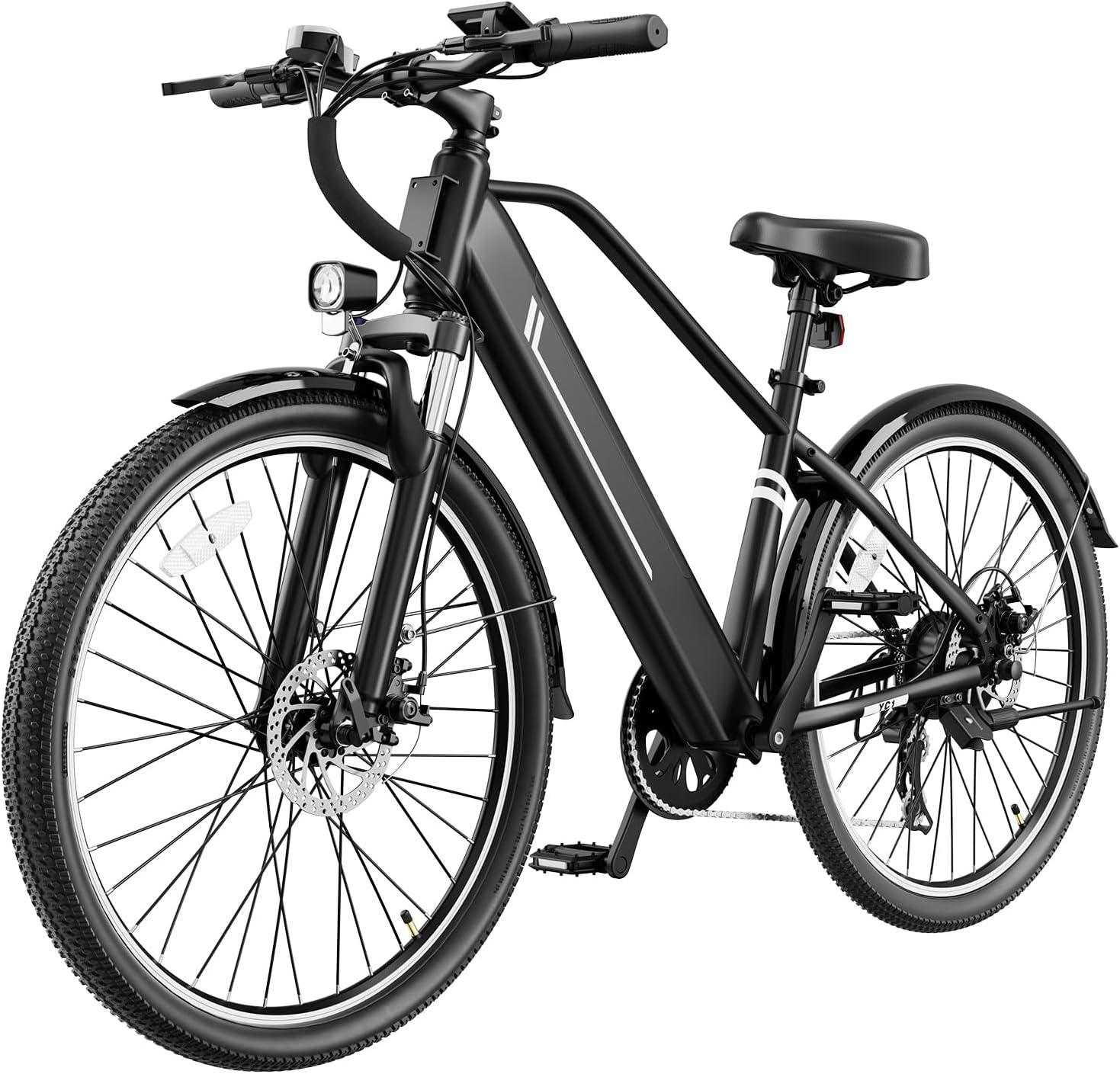

Overview — What the Peak 5000W/3000W Electric Bike Promises
The Peak electric bike line is aimed squarely at riders who want a true dirtbike-style electric bicycle that can double as a high-speed commuter or an off-road companion. The model family is offered in multiple configurations — common listings show options with 5,000W or 3,000W peak motor ratings (or more modest 2,000W variants in some SKUs), 52V or 48V battery packs, and 25Ah or 23Ah capacities — so headline specs will vary depending on the version you choose. On paper the top-of-the-line model advertises top speeds up to ~39 mph and ranges approaching 100 miles in pedal-assist modes. The bike couples those power and range figures with 26″ x 4.0″ fat tires, an aviation‑grade aluminum frame, lockable front suspension and a high‑definition color display. Peak positions this as a long‑range, high‑performance e‑dirtbike for adults — a niche product that straddles the line between traditional electric bikes and small electric motorcycles.
Performance and Ride Quality — Power, Speed and Handling
Performance is where the Peak earns attention. With the higher‑power motors (3,000–5,000W peak advertised), acceleration is brisk and throttle response is immediate. In real‑world riding you’ll notice very strong low‑end torque — useful for climbing and rapid starts — and the dual‑motor option (available on certain configurations) provides that extra push for steeper grades. The bike’s top speeds (mid/upper 30s mph on the spec sheet) are realistic in ideal conditions for the higher‑voltage, higher‑power packages; lower‑spec 48V / 2,000W variants will be slower. The 21‑speed drivetrain combined with five electric power levels and PAS (pedal assist) gives you flexibility: cruise on PAS for range, or use throttle for fast point‑to‑point travel. Handling is stable thanks to the fat tires which float over sand, snow and rough trails, and the lockable front fork lets you tune firmness for singletrack or pavement. That said, at higher speeds the bike’s weight and long wheelbase make quick, aggressive maneuvers feel more like a small motorcycle than a nimble commuter bike — which is fine if your intent is comfortable high‑speed riding rather than tight urban weaving.
Battery, Range and Charging — What to Expect in Everyday Use
Range is a headline feature in Peak’s marketing, and the larger battery options (52V/25Ah and 48V/23Ah) are capable of impressive mileage under the right circumstances. Claims of 90–100 miles in pedal‑assist mode are achievable in conservative riding conditions with lower PAS levels, light rider weight and minimal throttle use. If you ride primarily in full‑electric (throttle only) mode, expect substantially lower figures — more like 40–60 miles on the 48V/23Ah pack as the listing suggests. The removable battery is convenient for off‑bike charging and for securing the bike via the included keyed lock system; the keycode traceability is a nice touch if you ever need a replacement key. Charging times will vary by charger and battery size but plan on several hours for a full charge. Also bear in mind that range will be affected by terrain, rider mass, tire pressure and accessory load (lights, cargo, etc.). For daily commuters who mix PAS and throttle conservatively, the larger packs provide real utility — multiple days of riding between charges in many use cases.
Build Quality, Components and Onboard Features
Peak equips these bikes with an aviation‑grade aluminum frame that balances strength and weight, and the visible welds and finish on typical units are good for the price class. The 26″ x 4.0″ fat tires deliver traction and comfort off‑road while also smoothing out urban potholes. Suspension is handled by a lockable front fork that will soak up rough sections; there is no mention of a rear shock on standard builds, so full‑on trail riders might consider aftermarket rear suspension depending on intended use. Braking usually uses hydraulic or mechanical disc brakes — check the exact SKU — and powerful brakes are essential given the bike’s potential speeds and mass. The HD color display is a practical feature: it shows speed, battery level, PAS level and error codes, and the upgraded LED head/tail lights improve night visibility. Additional inclusions such as a pump, phone holder and bike lock are thoughtful extras that make the bike more ride‑ready out of the box. Peak also states that bikes come ~85% preassembled and that they provide tools, manuals and video guides for the remaining setup — which shortens the time from delivery to ride.
Practical Considerations — Legal, Maintenance and Daily Use
A few practical points are worth stressing before you buy. First, the higher‑speed, high‑power configurations likely exceed e‑bike classifications in many jurisdictions and could be considered motorized vehicles subject to registration, licensing or restrictions on public trails and bike lanes. Check local laws before riding at full performance. Second, these are heavy machines — the large battery and robust frame add heft — so lifting, transporting and storing the bike will require planning (a rear rack or lightweight trailer may be necessary for some owners). Maintenance is similar to other high‑power e‑bikes: keep tires inflated (the included pump helps), monitor disc pads, occasionally service the headset and drivetrain, and follow battery care practices to preserve longevity. Warranty and after‑sales support are notable strengths — Peak advertises up to 18 months of warranty coverage and claims responsive customer service with part traceability and fault codes for diagnostics. Finally, cost‑wise these bikes sit above entry‑level consumer e‑bikes but below full electric motorcycles; if you want real off‑road capability and meaningful range without moving into motorcycle licensing territory (where allowed), the Peak models represent a compelling middle ground.
Verdict — Who Should Buy It and Final Recommendations
The Peak electric bike lineup is a strong contender if you want a powerful, long‑range fat‑tire e‑bike that can perform on both beach and trail while still being practical for longer rides. Strengths include impressive power options, flexible riding modes (pedal assist, throttle, multi‑speed gearing), large removable batteries with excellent range potential, and an array of thoughtful accessories. The ride experience is confident and comfortable at speed, and the fat tires plus lockable fork bring real off‑road versatility. Downsides to weigh: the higher‑power variants may run afoul of local e‑bike regulations, the bike’s weight makes it less nimble in tight urban settings, and component specifics can vary between SKUs so inspect the exact spec before purchasing. My recommendation: choose the battery and motor configuration that matches your needs — pick the larger battery if range is critical, the dual‑motor setup if you frequently face steep terrain or heavy loads — and verify local rules for high‑speed e‑bikes. For weekend trail shredders who want long day ranges, or commuters who value speed and range over portability, the Peak series is worth serious consideration.