
Introduction
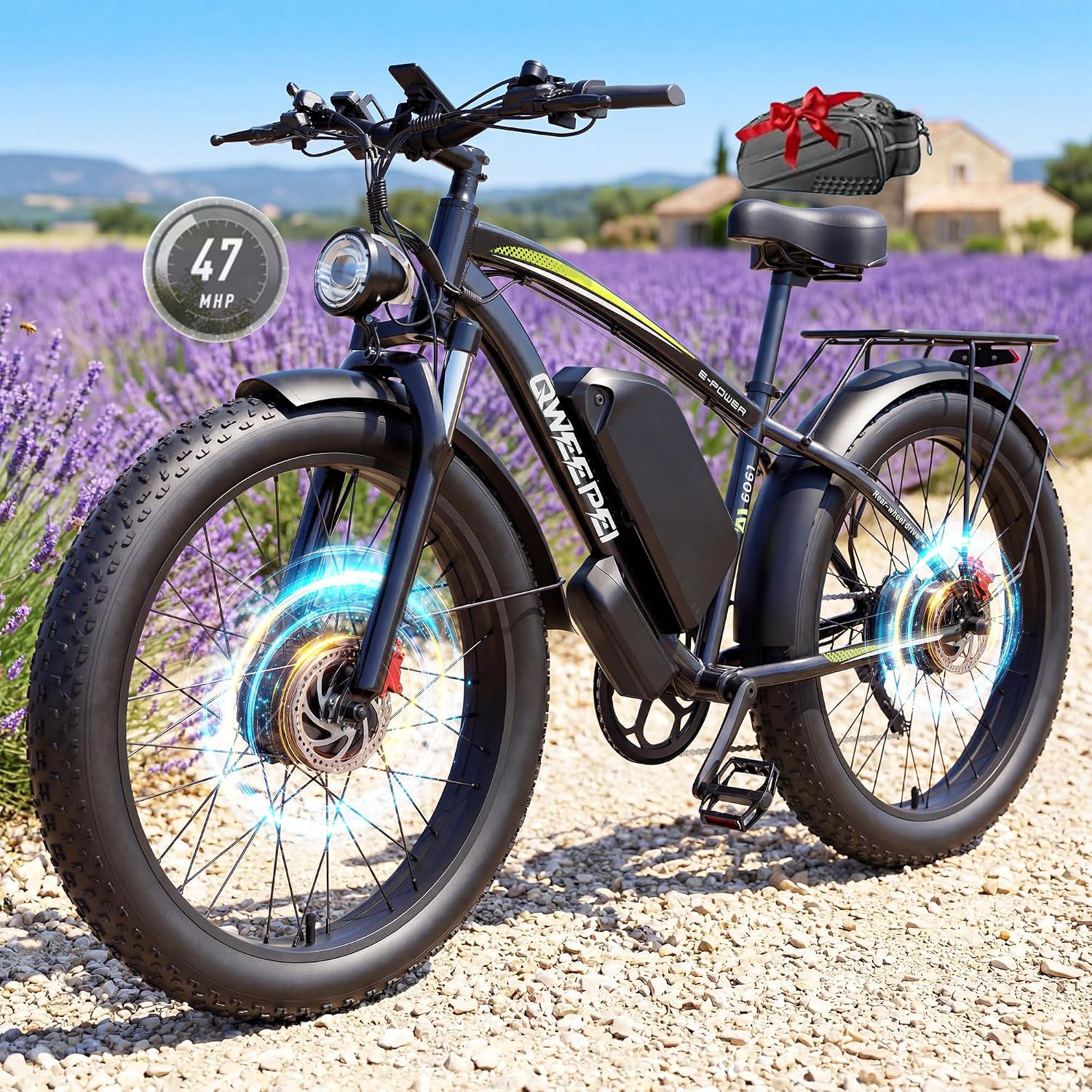
The Peak 9000W 52V Dual Motor Ebike aims to combine high-speed performance with all-terrain capability for riders seeking a powerful commuter or off-road machine. With a 52V 34AH (1768Wh) removable battery, fat 24″x4″ tires, and a dual-motor setup marketed at 9000W peak, the bike positions itself between heavy-duty electric motorcycles and traditional e-bikes.
This review examines the build, real-world performance, and practical trade-offs to help prospective buyers decide whether this model matches their needs.
Design & Build Quality
The frame is described as high-strength aluminum, which balances rigidity and weight compared with steel alternatives. The overall layout is typical for powerful fat-tire e-bikes: a low-ish center of mass with the battery mounted in the downtube area and a reinforced head tube to handle torque from the motors.
Ride surfaces are supported by 24″x4″ fat tires, which increase contact patch and stability on sand, snow, and loose dirt. These tires also provide significant bump absorption, reducing the dependency on suspension for small impacts.
Suspension is focused on the front with a professional fork system. This improves control over rough terrain and contributes to a more comfortable ride, although the lack of a specified rear suspension means very large impacts will still be transmitted to the rider.
Stopping power is handled by dual hydraulic disc brakes, a preferable choice for high-speed, high-mass machines. The inclusion of a plush faux leather seat and rubber ergonomic throttle indicates comfort was considered, but those components are secondary to frame geometry and suspension when it comes to long-ride comfort.
Practical features include a removable, weather-resistant battery with a key-lock for anti-theft protection, a smart LCD display showing speed, battery level and distance, and a 90% pre-assembled delivery with a video guide—useful for reducing setup complexity.
Performance & Range
The bike’s headline specs are the dual motor arrangement (rated up to 9000W peak) and a claimed 220 N·m of torque. Those figures suggest strong acceleration and hill-climbing capability. In practice, peak wattage is a short-duration number and continuous output will be lower, but the bike should still outperform typical mid-drive e-bikes on steep or loose terrain.
Top speed is quoted at up to 47 mph, with the manufacturer noting that actual top speed depends on battery level, rider weight, and terrain. Riders should treat that number as a maximum under ideal conditions; sustained high speeds will reduce range and accelerate component wear.
The battery is a 52V 34AH (1768Wh) pack that charges in 7–9 hours. Manufacturer range estimates are: up to 30 miles in dual motor mode, up to 40 miles in single motor mode, and up to 100 miles using pedal-assist (PAS). These figures align reasonably with battery capacity if you factor in riding style and power demands.
To put the numbers in perspective, a 1768Wh pack divided by a conservative 40–60 Wh/mi consumption yields roughly 30–45 miles under moderate use. With careful PAS use and lower average speeds, the pack can approach the upper range claims. Heavy throttle, high speeds, full off-road use, or carrying a heavy rider will push consumption higher and reduce range accordingly.
Suspension and frame setup support off-road use. The front fork absorbs impacts well, while the fat tires help with traction and flotation on loose surfaces. Combined with the torque figure, this makes the bike competent on dirt tracks, beach access roads, and steep approaches—though very technical singletrack is outside its sweet spot due to weight and width.
Safety systems such as dual hydraulic discs and a robust frame help control the bike at speed. However, high-speed operation necessitates appropriate protective gear and awareness of local regulations restricting motorized bike speeds on public roads or bike paths.
Who Is This Best For?
- Commuters with mixed terrain: Riders who need to traverse paved roads, gravel, and light trails and want a powerful, comfortable platform.
- Recreational off-road riders: People who prioritize stability and fun over lightweight maneuverability—ideal for beach, snow, or forest service roads.
- Those seeking high-power performance: Users who want strong acceleration and hill-climbing ability for short, fast runs.
- Riders needing long-range PAS: Cyclists who will use pedal-assist extensively to extend range on long tours.
- Do-it-yourself mechanics: Buyers comfortable with a 90% pre-assembled product and minor setup after delivery.
Trade-offs to Consider
- Weight and portability: High-capacity battery and dual motors add significant mass. Expect limited portability and difficulty lifting or storing the bike without assistance.
- Local laws and road legality: Claimed top speeds (up to 47 mph) may exceed legal limits for e-bikes in many jurisdictions and could reclassify the vehicle into moped or motorcycle categories requiring registration, insurance, or licensing.
- Maneuverability in tight spaces: 24″x4″ fat tires and a wider frame reduce agility in dense urban traffic, narrow trails, and bike racks.
- Range variability: Real-world range depends heavily on throttle use, terrain, rider weight, and cargo. The highest PAS ranges assume conservative power use and active pedaling.
- Single suspension setup: The bike relies on front suspension and fat tires for comfort; riders expecting full-suspension handling for aggressive singletrack should look elsewhere.
- Maintenance and parts: High-power systems can increase wear on drivetrain and brakes. Verify local service options and spare parts availability before purchase.
Final Verdict
The Peak 9000W Dual Motor Ebike is a purpose-built, high-capacity electric bike that delivers strong acceleration, competent off-road handling, and flexible riding modes thanks to a 1768Wh removable battery and robust mechanical components. It is best suited to riders who need power and range for mixed-surface commuting or recreational off-road use and who accept the inevitable trade-offs in weight, maneuverability, and regulatory complexity. If you prioritize stability and performance over featherweight portability, this model represents a compelling option—check current price and availability to determine whether it fits your budget and local legal requirements.