
Introduction
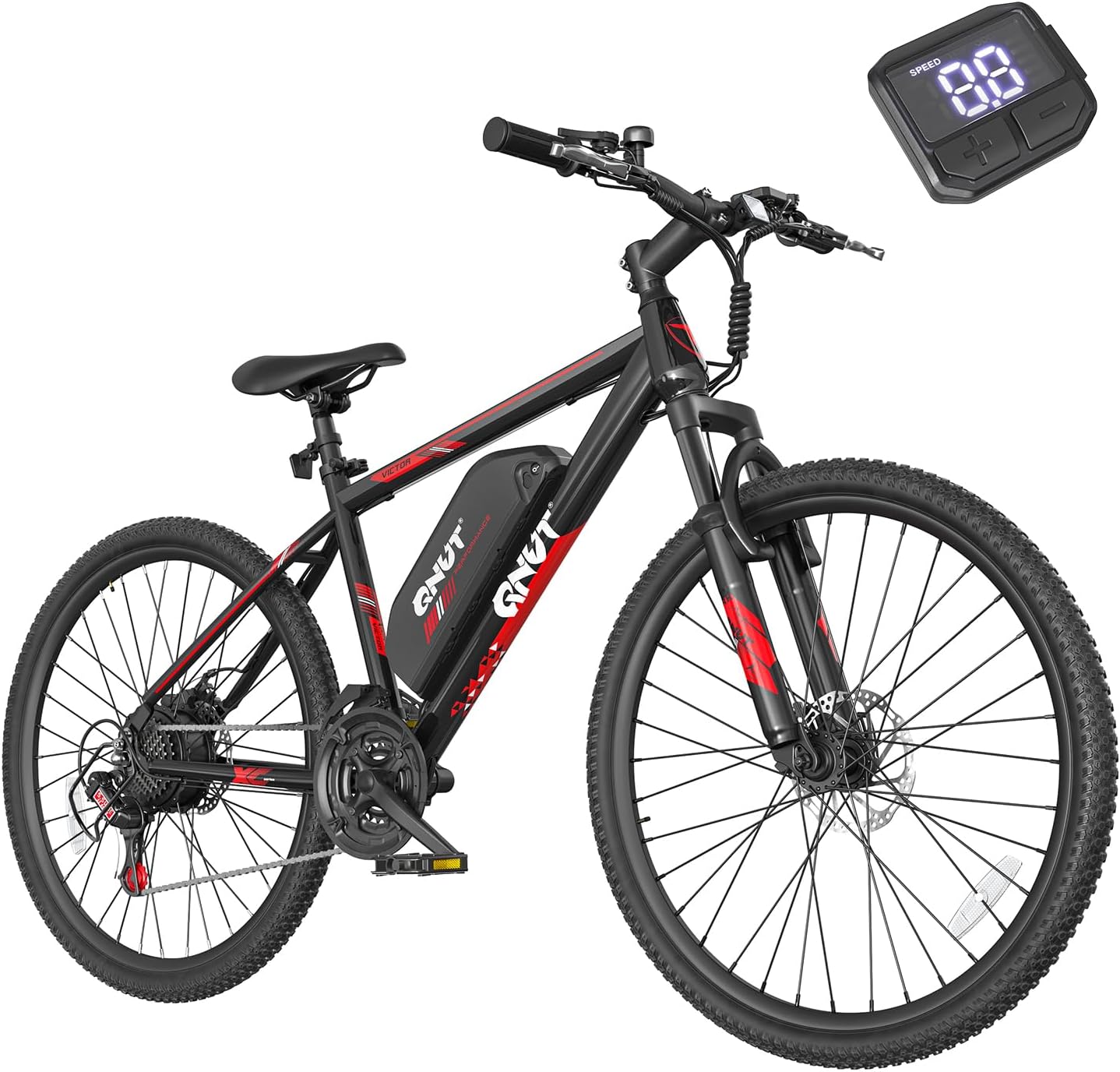
The QNUT Electric Bike positions itself as a practical commuter and weekend explorer, combining a Peak 1000W brushless rear-hub motor with a 21-speed drivetrain and a removable 36V 10.4Ah (375Wh) battery. It markets durability and everyday usability through a heavy-duty steel frame, puncture-resistant tires, front suspension, and mechanical disc brakes. This review takes an objective look at the bike’s design, performance, real-world range, and trade-offs so prospective buyers can decide if it fits their needs.
Design & Build Quality
The frame is a heavy-duty steel design that prioritizes durability and stability. At a net weight of about 25 kg and a maximum rider load of 140 kg (308 lbs), the bike feels planted on uneven pavement and is aimed at riders who value sturdiness over featherlight portability.
Wheel and tire choice is conservative and practical: 26″ rims with 2.125″ puncture-resistant tires are a sensible compromise for urban streets and light trails. The wider tire profile helps absorb bumps and provides traction, though 26″ wheels have slightly different roll characteristics than 27.5″ or 29″ alternatives.
Stopping power comes from front and rear mechanical disc brakes. They offer consistent performance in variable weather, but mechanical discs typically provide less modulation and raw stopping force than hydraulic systems, and they require occasional cable adjustment. The backlit LCD gives essential readouts (speed, battery) at a glance, and the adjustable handlebar stem lets riders dial in a comfortable position.
Practical features include a removable battery for indoor charging and a 90% pre-assembled delivery that reduces setup time. The paint and finish are functional; steel offers longevity if maintained, but is heavier than aluminum and can be more vulnerable to corrosion over many years if left exposed to salt or damage.
Performance & Range
QNUT specifies a Peak 1000W brushless rear-hub motor with a continuous/rated power indication of 350W. In practice this means the motor can produce strong bursts of power for acceleration and hill assistance, while its continuous output aligns more with typical e-bike power limits. The bike is claimed to climb grades up to 15° comfortably when assisted.
The 21-speed drivetrain (Shimano-style) pairs well with the motor, letting riders fine-tune cadence and effort when pedaling manually or when using pedal-assist modes. Shifting performance will depend on specific components and setup; a properly tuned derailleur provides predictable gear changes for mixed-terrain riding.
Range is one of the QNUT’s selling points. The removable 36V 10.4Ah battery (375Wh) is UL 2849 certified for electrical safety, and QNUT quotes up to 45 miles in pedal-assist (PAS) mode and up to 25 miles on throttle alone. Those figures are achievable under favorable conditions—moderate assist levels, flat terrain, conservative rider weight, and steady speeds. Real-world range will vary significantly with assist level, terrain, rider mass, wind, and stop-start urban riding.
Top speed claims are up to 28 MPH with PAS unlocked and up to 20 MPH on throttle. These figures should be viewed in context: local regulations and safety considerations often limit legal e-bike speeds, and sustained high-speed operation will reduce range noticeably.
Ride comfort is enhanced by a front suspension fork and the relatively wide tires, which together soak up bumps on rough pavement and gravel paths. The suspension is adequate for light trail use, but the QNUT is not intended as a full-suspension off-road machine. Charging from empty takes about 4–6 hours with the included 42V 2A adapter, and the removable battery makes indoor charging convenient and safer for long-term battery health.
Who Is This Best For?
- Commuters who need a durable, stable e-bike for daily rides and errands and who value battery removability for indoor charging.
- Weekend riders who want motor assistance for longer rides or hillier routes without investing in a high-end, lightweight performance e-bike.
- Riders who prioritize straightforward maintenance and robust construction over cutting-edge components or ultralight frames.
- People who need a bike with a higher payload capacity (up to 140 kg) for carrying cargo or a heavier rider.
- Buyers looking for safety certifications—UL 2849 battery certification and an IP54 water resistance rating for all-weather city use.
Trade-offs to Consider
- Weight: At approximately 25 kg, the QNUT is heavier than many aluminum-framed e-bikes, making it less convenient to carry up stairs or load onto a rack.
- Legal limits: The quoted 28 MPH PAS top speed and the motor’s 1000W peak capability may exceed local e-bike regulations in some regions; check laws on power and speed before use.
- Mechanical disc brakes: Reliable and easier to maintain, but they do not match the stopping power and modulation of hydraulic systems—important if you frequently ride in hilly terrain or with heavy loads.
- Battery capacity: A 375Wh pack provides respectable range for commuting, but heavier riders, frequent high-assist use, or steep climbs will reduce usable miles below the quoted maximums.
- Steel frame trade-offs: Steel offers durability and a comfortable ride but is heavier and potentially more prone to corrosion than treated aluminum or alloy frames if not cared for.
- Limited off-road capability: The bike suits light trails and gravel paths, but the frame, suspension, and components are not designed for aggressive mountain biking or technical singletrack.
Final Verdict
The QNUT Electric Bike is a pragmatic, well-rounded option for riders who want a robust daily commuter and weekend machine with a removable UL-certified battery, substantial payload capacity, and strong peak motor assistance. It balances practical features—puncture-resistant tires, front suspension, 21-speed gearing, and easy maintenance—with trade-offs in weight and braking technology. For those seeking a dependable, all-weather urban e-bike that favors durability over minimal weight, the QNUT presents a clear value proposition; check current price and availability to determine if it fits your budget and local e-bike regulations.